Wilhelm-Busch-Mühle, Historical watermill and museum in Ebergötzen, Germany
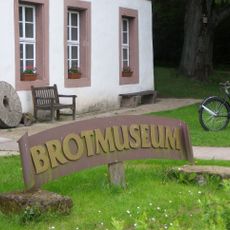
The Wilhelm-Busch-Mühle is a watermill museum in Ebergötzen with a working grinding mechanism and original water wheel powered by water. The building displays how grain was processed into flour using natural water power.
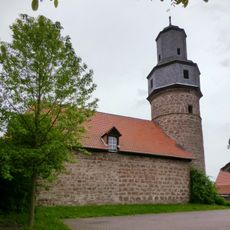
The present mill building was erected in 1528, after an earlier mill on the site probably burned down. A mill at Radolfshausen was first recorded in the 14th century, though its identity with this one is not certain. In 1849 Erich Bachmann's grandfather bought the mill from the Hanoverian royal house; it ran regularly until 1938. Busch did not grow up here: from age nine he lodged with his uncle, pastor Georg Kleine, and befriended the miller's son Erich Bachmann.
Busch did not grow up in the mill: at nine his parents placed him with his uncle, pastor Georg Kleine of Ebergötzen, who taught him privately for five years. There he befriended Erich Bachmann, the miller's son, and later said some scenes in Max und Moritz, published in 1865, came from this time. The museum keeps a collection of Max-und-Moritz translations into foreign languages and dialects.
Access to the mill is available along pathways around the grounds, though some areas require climbing stairs. Wearing comfortable shoes is advisable since visiting involves walking around and exploring the building and its mechanisms.
The mill's permanent exhibition holds a large collection of Max und Moritz translations into foreign languages and dialect versions, plus a video installation of foreign-language and dialect readings of the story. The building itself dates to 1528, and the mill was in regular operation until 1938.
The community of curious travelers
AroundUs brings together thousands of curated places, local tips, and hidden gems, enriched daily by 94,046 contributors worldwide.