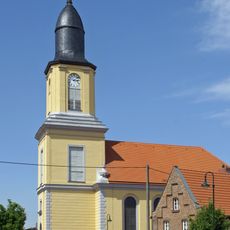
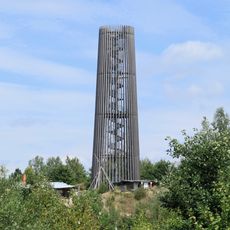
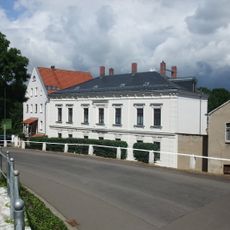
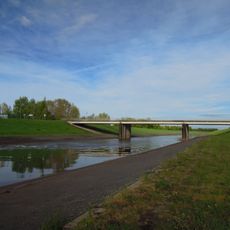
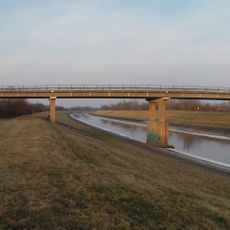
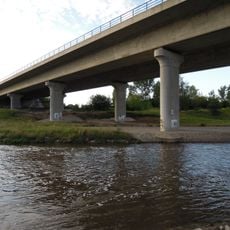
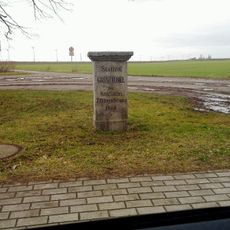
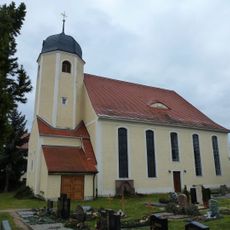
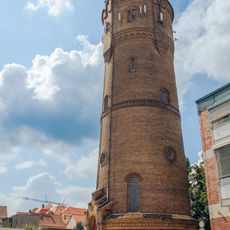
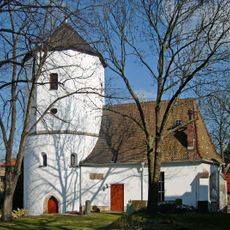
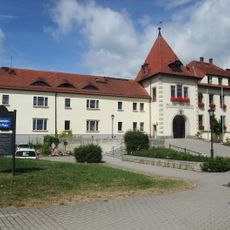
Rittergut Eythra, Manor house in Eythra, Germany.
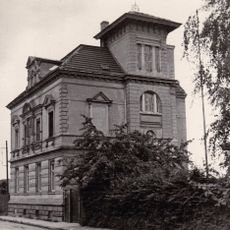
Rittergut Eythra was a three-wing Baroque manor house rebuilt around 1733 by Georg von Werthern the Elder, with a park laid out around 1750 and a four-row linden avenue. The dining room, known as the Römischer Saal, was hung with painted wallpaper after Piranesi's Vedute di Roma. The building was demolished in 1987 for the Zwenkau open-cast mine.
The estate grew from a Slavic fortress built in the 10th century and was later transformed into a Renaissance structure. In 1658 Johann Georg von Rechenberg took over the property and shaped the design that would remain for centuries.
The dining room held wallpapers inspired by Piranesi's Roman views, showing how educated owners in the 18th century decorated their homes with classical themes. These wall coverings reveal the taste of the period for bringing distant Italian landscapes into German interiors.
The property no longer stands today as it was demolished during the late 1980s. Visitors interested in the site can explore historical records and possibly view any remaining foundations on the land.
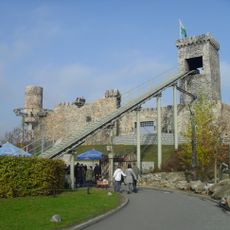
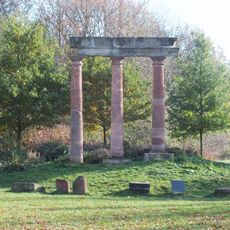
The Trianon, a mock Roman temple ruin in the park, is thought to have been built at Goethe's suggestion: Jacob Friedemann von Werthern's wife Luise was a sister of the Prussian reformer vom und zum Stein, and the couple's ties to the Weimar court brought them into contact with Goethe, who valued her highly.
The community of curious travelers
AroundUs brings together thousands of curated places, local tips, and hidden gems, enriched daily by 93,732 contributors worldwide.