Schlosspark Putbus, English landscape park in Putbus, Germany
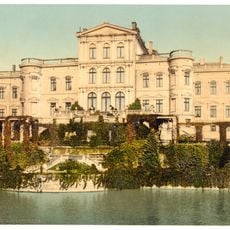
Schlosspark Putbus is a 75-hectare landscape park laid out from 1725 in French style for Count Moritz Ulrich I and redesigned from 1804 in English style for Prince Wilhelm Malte I. Its centre was Schloss Putbus, built 1827–1832 and blown up in 1962; only the terrace and foundations remain. A deer enclosure has existed since 1815, and more than 60 tree species grow in the park.
Count Moritz Ulrich I of Putbus had the park laid out from 1725 as a landscape park in the French style with geometrically regular forms. From 1804 Prince Wilhelm Malte I redesigned it as an English landscape garden, inspired by the Prussian parks he knew from his winters in Berlin from 1816. The castle built between 1827 and 1832 stood at its centre until it was blown up in 1962; only the terrace and foundations remain.
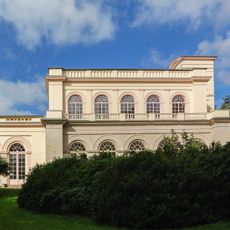
The Orangerie was built in 1824 on the site of the demolished Belvedere. Exotic plants were acclimatised there before being planted out in the park. The Marstall, also from 1824, now hosts concerts of the Festspiele Mecklenburg-Vorpommern.
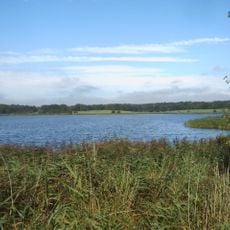
The park and the deer enclosure are open to visitors free of charge. Paths run through the grounds and past the Schwanenteich, whose artificial island is reached by a bridge. The terrain softens after rain, so sturdy shoes help on the meadow and woodland paths.
The park holds more than 60 tree species, among them giant sequoias, dawn redwoods, cedars, yellow-flowering horse chestnuts and tulip trees. A memorial stone commemorates garden inspector Carl Günther, who oversaw the grounds.
The community of curious travelers
AroundUs brings together thousands of curated places, local tips, and hidden gems, enriched daily by 94,658 contributors worldwide.