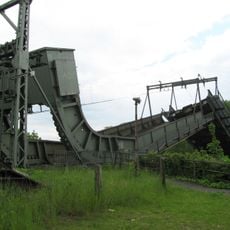
Port of Oldenburg, Inland port on the Hunte River in Oldenburg, Germany
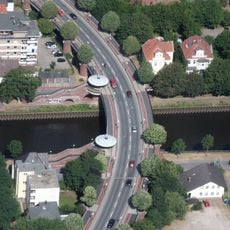
The Port of Oldenburg is an inland harbor on the Hunte River that links ships to coastal ports and across Europe. The site includes multiple loading docks, storage buildings, and berths for different types of vessels.
Oldenburg received city rights under Bremen law in 1345, opening access to sea trade; 14th-century charters record goods being handled and "staut" at the river port, a term still borne by the street name Stau. Under Count Anton Günther the port prospered in the 17th century, with the Stautor gate standing by the harbour. By the 19th century it was the leading inland port of the Oldenburg region, importing fish from Norway, Denmark and Iceland, French wine and Norwegian timber.
The name Stau, a street by the old harbour basin, recalls the medieval practice of "stauen" — damming and handling goods at the river quay, documented since the 14th century. The Rondell on the east side, built in 1948/49 by architect Karl-Joseph Pfeiffer as the Stautorcafé, later housed a discotheque and an ice-cream café and became a well-known local outing spot.
The port is close to highways A28 and A29 and has direct train connections to other cities. Visitors can reach the area easily by car or train and then walk along the water on foot.
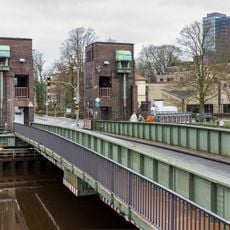
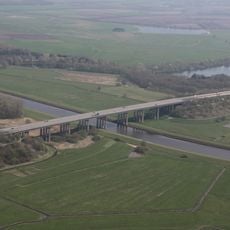
The railway bridge over the Hunte near Oldenburg, built in the late 1860s as a swing bridge, had to avoid obstructing ship traffic. Since a February 2024 ship collision destroyed the railway bridge at Elsfleth and the temporary bridge is not movable, the Port of Oldenburg is expected to be cut off from seagoing shipping for several years.
The community of curious travelers
AroundUs brings together thousands of curated places, local tips, and hidden gems, enriched daily by 93,706 contributors worldwide.