Fort Kongenstein, Danish colonial fort in Ada Foah, Ghana
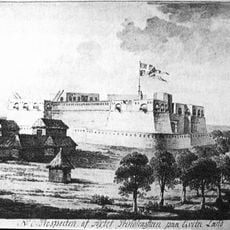
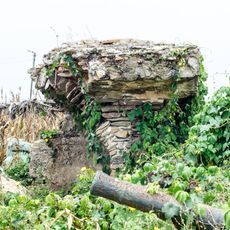
Fort Kongenstein sits where the Volta River flows into the Atlantic Ocean in Ghana. Only fragments of the original stone structure remain visible along the shoreline today.
Construction of Fort Kongenstein began on 15 October 1783, on the right bank of the Volta mouth, to protect the Danish factory on Ada Island and control river trade and salt routes. Denmark held it until 1850, when it passed to Britain and remained British until Ghana's independence.
The fort's name comes from the Danish Kongensteen, or King's Stone, and it was also known as Fort Ada after the neighbouring village, then called Tuberku. The area was a centre of salt production, traded north to Kete Krachi and Salaga and onward to Asante markets.
The fort stands on the right bank of the Volta mouth at Ada Foah, and most of the structure has been washed away by the sea, so only fragments remain along the shore. Approach from the landward side and keep back from the water's edge, where the ground is uneven and stones are loose. Sturdy shoes help on the eroded surface.
The fort's Danish name, Kongensteen, means "King's Stone". It was built on the right bank of the Volta mouth at a point chosen to control river trade and the salt routes that ran north to Kete Krachi and Salaga. A Dutch factory had stood nearby in the 1770s before the Danes raised their own fort.
The community of curious travelers
AroundUs brings together thousands of curated places, local tips, and hidden gems, enriched daily by 93,459 contributors worldwide.