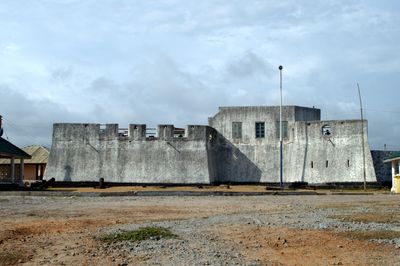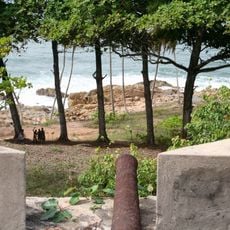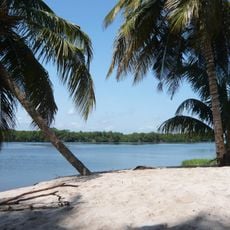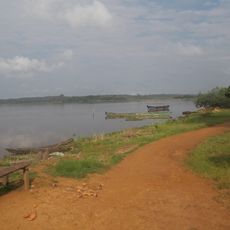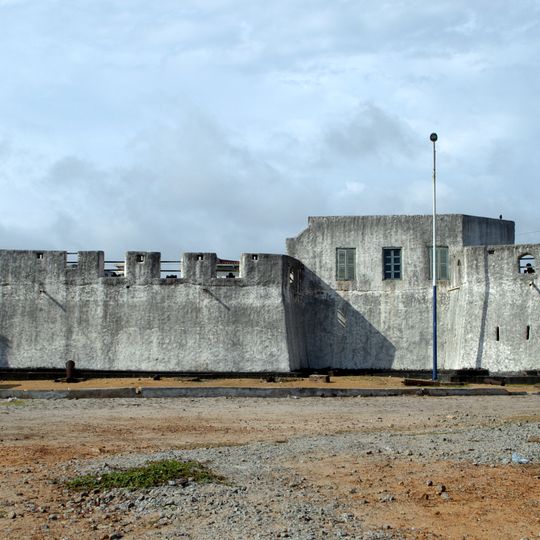
Fort Apollonia, Colonial fort in Beyin, Ghana.
Fort Apollonia is a stone coastal fort in the Western Region of Ghana, built on raised ground overlooking the sea. It has thick walls, several rooms, and a fortified layout that follows the pattern of colonial-era trading posts along the Gulf of Guinea.
The Swedes set up a trading post at Apollona between 1655 and 1657, and in 1691 the British erected a trading post on the same site. Between 1768 and 1770 that post was extended into a fort. Britain transferred it to the Dutch in 1868, when it was renamed Fort Willem III, and on 6 April 1872 it passed back to Britain with the Dutch Gold Coast. British forces bombarded it in 1873 during the attack on Beyin for siding with the Ashantis.
Since 2010 the fort has housed the Museum of Nzema Culture and History, run with the Ghana Museums and Monuments Board. Its displays cover the Nzema people, whose homeland runs from western Ghana into eastern Côte d'Ivoire, and the coastal trade that passed through Beyin. The building itself was rehabilitated between 1962 and 1968 before the museum opened.
A visit is most comfortable in the morning before the coastal heat builds up during the day. The paths around the site are uneven, so sturdy footwear makes walking through the compound easier.
The Portuguese who named the coast on 9 February, the feast of Saint Apollonia, left no fort behind: the Swedes ran a trading post at Apollona from 1655 to 1657, and the British post of 1691 was only extended into a fort between 1768 and 1770. The name outlived all three trading powers.
The community of curious travelers
AroundUs brings together thousands of curated places, local tips, and hidden gems, enriched daily by 92,885 contributors worldwide.