Musée National du Costume de Grand-Bassam, National Costume Museum in Grand-Bassam, Ivory Coast
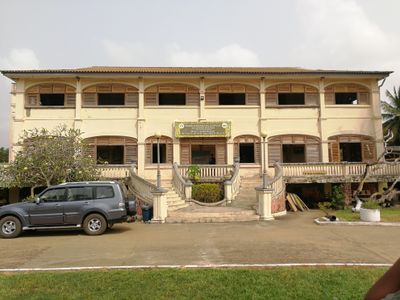
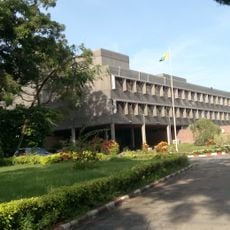
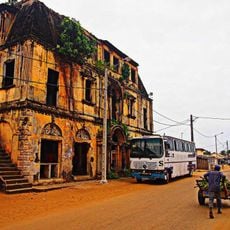
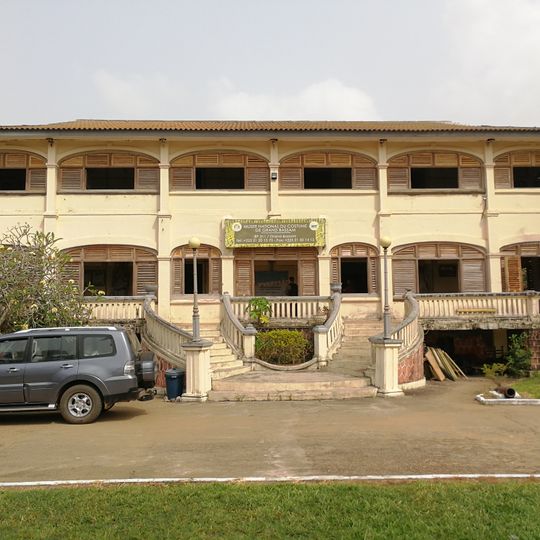
The Musée National du Costume de Grand-Bassam occupies the former governor's palace itself, a building erected in 1893 from prefabricated metal beams and girders on a structure dating from 1849. A two-metre basement serves as a store, with a raised ground floor and one upper level wrapped by a veranda on small metal columns. The museum covers more than 4,000 m² and held over 1,137 objects in 2017.
The building was erected in 1893 from prefabricated metal beams and girders shipped in April of that year, on a structure dating from 1849. It housed the first four governors of the Côte d'Ivoire colony: Binger (1893-1896), Bertin (1896), Moutet (1896-1898) and Roberdeau (1898-1902). After the 1900 yellow fever epidemic moved the capital to Bingerville, it fell into disuse, was rehabilitated with French cooperation funds in 1976 and restored from 1977 to 1980. It opened as a museum in 1980 and was made official by ministerial decree no. 003 of 30 April 1981 under culture minister Bernard Dadié.
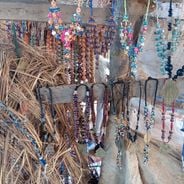
The museum's name comes from its costume collection, which by 2017 held more than 1,137 objects covering all of Ivory Coast's regions. Besides garments and adornments, it keeps miniature and full-size dancing masks, models of traditional dwellings, and colonial and ethnographic photographs. Temporary exhibitions have been favoured since 2012 to extend the life of the pieces.
The museum occupies the former governor's palace on a large plot between boulevard Treich-Laplène to the south and boulevard Bonhoure to the north, in the old town. The building has a raised ground floor and one upper level, reached by a double-ramp staircase on the south facade. The city and prefecture share the same plot, so expect administrative traffic around the entrance.
The museum occupies the former governor's palace itself, not a building beside it. Prefabricated metal beams arrived in April 1893 and were set on a structure from 1849; the metal frame was later encased in masonry against marine corrosion. The axial column blocked a central entrance, so it was removed and replaced by the double-ramp stair now on the south facade.
The community of curious travelers
AroundUs brings together thousands of curated places, local tips, and hidden gems, enriched daily by 92,757 contributors worldwide.