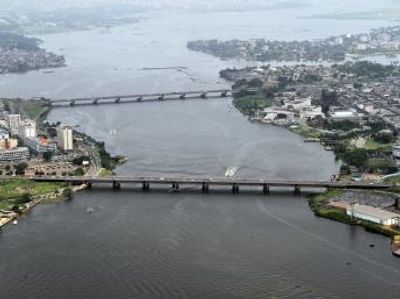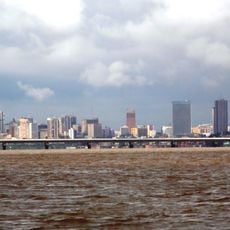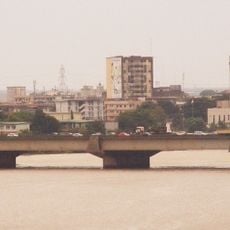
Houphouët-Boigny Bridge, Road and rail bridge in Abidjan, Ivory Coast.
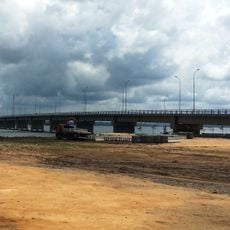
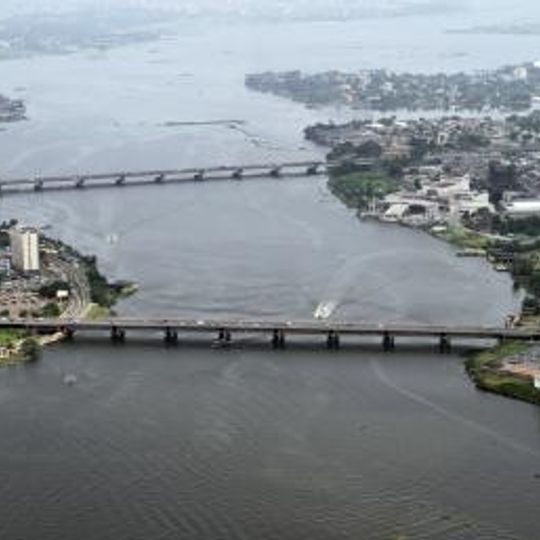
The Houphouët-Boigny Bridge is a road and rail structure crossing the Ébrié Lagoon in Abidjan, built from concrete with a design that supports both vehicle and train traffic. The construction consists of eight main spans that carry the upper roadway and the lower rail tracks in hollow sections.
The bridge was completed in 1951 following designs by French engineer Nicolas Esquillan and was named after Félix Houphouët-Boigny, the nation's first president. The structure became an important symbol of the newly independent nation's development and modernization.
The bridge links different neighborhoods of Abidjan and serves as a daily passage for residents moving between the lagoon shores. People cross it on foot, by car, or by train, making it a central part of how the city functions.
The bridge is open daily for vehicles, pedestrians, and train passengers, connecting two major parts of the city. Visitors should be aware that the upper level carries road traffic while trains use the lower sections, and congestion can be heavy during peak times.
The bridge was built using advanced techniques that required no temporary support structures during construction, a notable engineering achievement of its time. This was accomplished through the use of precast prestressed concrete components that could be assembled in place.
The community of curious travelers
AroundUs brings together thousands of curated places, local tips, and hidden gems, enriched daily by 91,108 contributors worldwide.