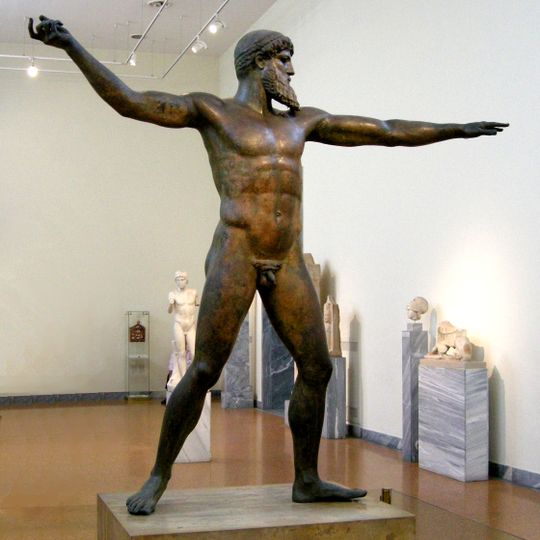
Artemision Bronze, Ancient bronze sculpture in National Archaeological Museum, Greece
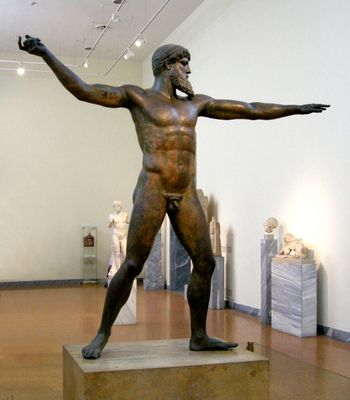
The Artemision Bronze is a Greek bronze statue in the National Archaeological Museum of Athens standing 209 centimeters tall. The figure shows a bearded man with outstretched arms representing either Zeus or Poseidon, though the original attribute held in the right hand is missing.
Discovered in 1926 in a shipwreck off Cape Artemision, the bronze figure dates to 460 BCE. The statue likely survived because the transport ship sank before the metal could be melted down.
The figure shows the severe style of Greek art just before the Classical period through balanced proportions and a moment frozen before movement. Originally the eye sockets held bone inlays, the eyebrows were crafted from silver, and the lips were shaped from copper.
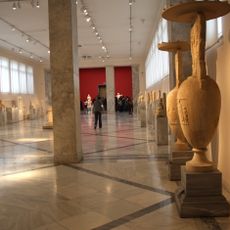
The museum displays the statue in a hall together with around 1,000 selected pieces from a collection of 17,000 sculptures. The setup allows visitors to view the bronze work from different angles.
Most ancient bronzes were melted down over the centuries to reuse the metal. This work only survived because it lay on the seabed and thus escaped destruction.
The community of curious travelers
AroundUs brings together thousands of curated places, local tips, and hidden gems, enriched daily by 91,224 contributors worldwide.