Isthmia, Archaeological site with Temple of Poseidon in Corinthia, Greece.
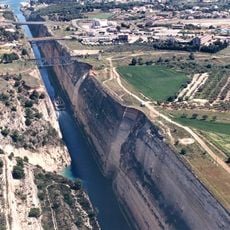
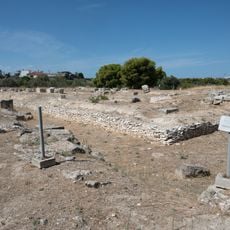
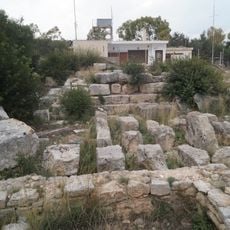
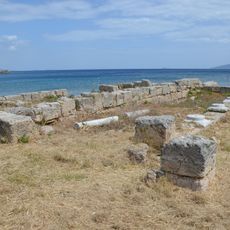
Isthmia is an archaeological site on the Isthmus of Corinth in Greece, with the remains of a Doric temple of Poseidon, a Roman bath complex, and two stadiums used for the Isthmian Games. The sanctuary sits on the land route between Athens and the Peloponnese, and its buildings lie at different levels across the site.
Isthmia was a sanctuary of Poseidon on Corinthian territory, famous for the Isthmian Games, second in importance only to Olympia. The Archaic temple burned in 480 BC and was repaired with Classical elements; Agesilaus encamped there in 390 BC and the temple burned again. Philip II formed the League of Corinth at Isthmia after Chaeronea in 338 BC, and Flamininus proclaimed the Freedom of the Greeks there in 196 BC.
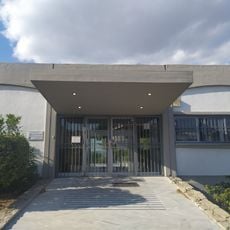
The archaeological museum displays artifacts from excavations, including pottery, sculptures, and inscriptions that reveal details about ancient Greek religious practices.
The sanctuary lies on the land route between Athens and Corinth, with the temple, the Roman bath complex and the two stadia set at different points of the site. The ground is exposed and shade is scarce, so carry water and sun protection in warm months. The museum stands apart from the excavated areas.
Oscar Broneer, who located the temple in 1952, excavated two stadia at Isthmia along with the theatre and two dining caves; his finds appeared in three volumes from 1971. From 1967 Paul A. Clement of UCLA led work on the north and east sectors, later continued by Timothy E. Gregory and, from 2020, Jon Frey of Michigan State University.
The community of curious travelers
AroundUs brings together thousands of curated places, local tips, and hidden gems, enriched daily by 93,624 contributors worldwide.