Lake Copais, Dry lake in Boeotia, Greece.
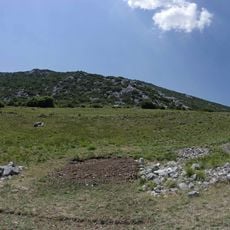
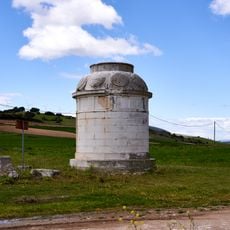
Lake Copais is a dried lake occupying a wide, flat basin in central Boeotia, Greece. The former lakebed now consists of agricultural fields and grassland, with the landscape showing the broad outline of where water once covered the terrain.
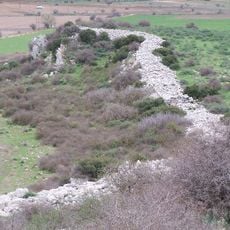
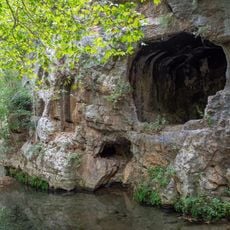
Mycenaean engineers drained part of the basin in the Bronze Age, building earth dams about 22 km long and later a canal of some 25 km toward natural sinkholes; the system collapsed by Late Helladic IIIC. Roman attempts are attributed to a local man, Epameinondas Epameinondou, and to Hadrian. Modern works began in 1882-1886 under a French company, failed when the lakebed subsided about 4 m, and were finished by the British Lake Copais Co Ltd in 1931, recovering 241 km2.
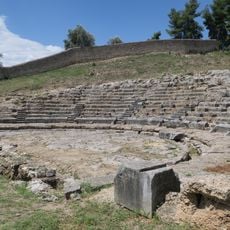
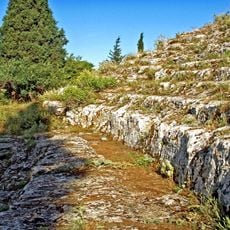
The name Kopaida comes from the ancient Boeotian city of Copae, near today's village of Kastro; the lake was also called Cephisis because the Cephissus flowed into it. Ancient sources record that Lake Copais was known for its fish, especially eels. In myth, Heracles dug out the Cephissus to flood the plain and unhorse the Minyans of Orchomenus.
The flat basin is crossed by farm tracks and the road built by the Kopais Lake Agency, which finished its drainage and road work in 1957. The agency kept a staff of 30, including a driver for its president, until 2010. Walking means sharing the land with cultivated fields, so keep to tracks and field edges.
The lake's fish, especially eels, were noted by the travel writer Pausanias and the comic playwright Aristophanes in the 5th century BC. The playwright's reference shows the eels were already a byword in his day, long before the modern drainage works.
The community of curious travelers
AroundUs brings together thousands of curated places, local tips, and hidden gems, enriched daily by 94,660 contributors worldwide.