Gla, Archaeological site in Boeotia, Greece
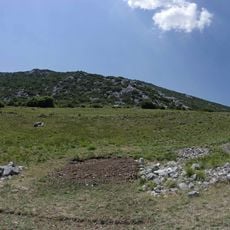
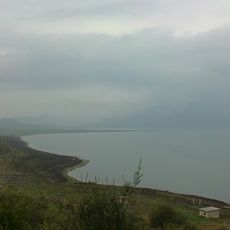
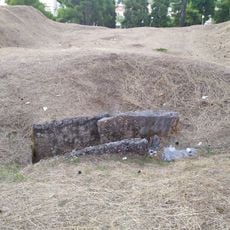
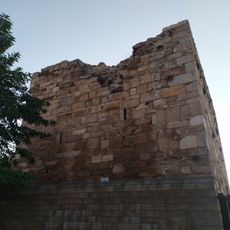
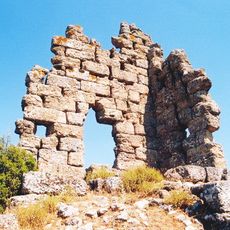
Gla is a Mycenaean fortified site on a flat-topped limestone outcrop up to 38 m high in Boeotia, once jutting into Lake Kopais. Its Cyclopean wall, built around 1300 BC, runs about 2.8 km and encloses roughly 20 hectares, with four gates reached by built ramps. Inside, an L-shaped building called the palace stands on an artificial terrace, and two parallel complexes lie in the so-called agora.
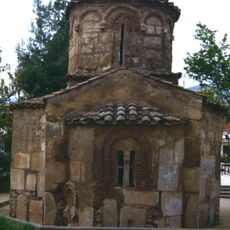
Gla's walls were built around 1300 BC, at the start of Late Helladic III B, at the same time as the Kopais drainage system of dams and canals. Occupation was not limited to the Mycenaean period: the site has yielded Neolithic and Byzantine pottery, but no Archaic-Classical or Roman material. The drainage works collapsed at or after the end of the Mycenaean civilisation, and Lake Kopais returned in Classical Antiquity.
Locals call the site Palaiokastro, "ancient fortress"; the name Gla comes from the Arvanitic goulas, borrowed from Turkish kulle, "tower". Excavations found fired pan and cover tiles, showing some Mycenaean buildings already had pitched, tiled roofs. Carbonised grain in one building suggests storage.
The site is open during daylight hours and you can walk on unmarked paths through the ruins to explore different areas. Bring sturdy shoes and water, as there is little shade and paths can be uneven or slippery in places.
Fired pan-and-cover roof tiles found in the buildings at Gla show that some Mycenaean structures already had pitched, tiled roofs like those of Classical antiquity. The site also yielded pottery from Neolithic and Byzantine times, though it seems not to have been occupied in the Archaic-Classical or Roman periods.
The community of curious travelers
AroundUs brings together thousands of curated places, local tips, and hidden gems, enriched daily by 92,870 contributors worldwide.