Myrtos Pyrgos, Minoan archaeological site near Myrtos, Ierapetra Municipality, Crete, Greece
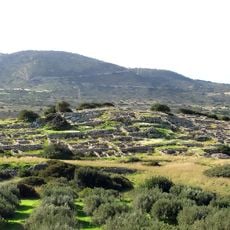
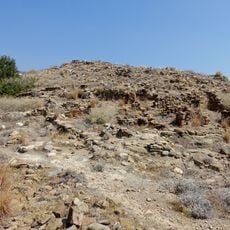
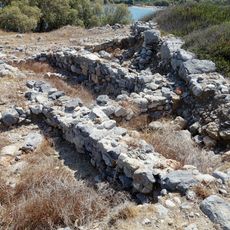
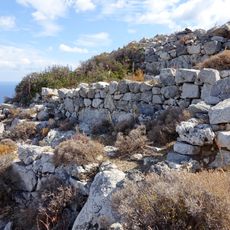
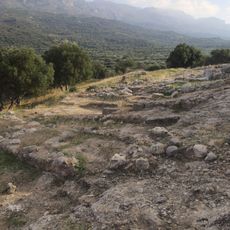
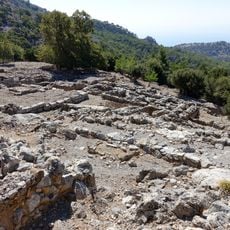
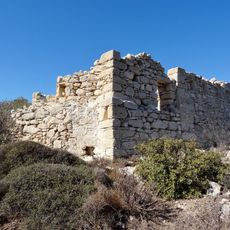
Myrtos Pyrgos is a Minoan site on a hill about 75 m high, 500 m from Myrtos and 120 m from the coast. Excavated from 1970 to 1982 by Gerald Cadogan, it covers 884.5 m² and includes a house tomb with a central pillar, two ossuaries, and a paved court with a filled kouloura silo.
The settlement developed from around 3000 BCE and remained inhabited across several Minoan periods. Archaeological work beginning in the 1970s revealed how this community evolved and eventually declined.
The house tomb held 65 burials from the Pyrgos III and IV phases, all of them male, with grave goods of cups, conical cups and cooking ware. One skeleton was given the skull of an older man, another had an extra long bone. A 15-metre paved path led to the tomb and widened into a 4 × 3 metre court.
The site sits on elevated ground with views across farmland and can be reached through the nearby village of Myrtos. Wear sturdy shoes for uneven terrain and bring water, as there is little shade on hot days.
Two circular cisterns on the hill, one on the north slope and a smaller one on the plateau, are considered the oldest known cisterns of Minoan Crete. Their walls and floors carried a one to two centimetre layer of white lime plaster.
The community of curious travelers
AroundUs brings together thousands of curated places, local tips, and hidden gems, enriched daily by 94,457 contributors worldwide.