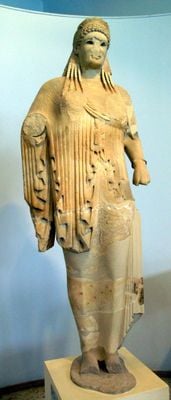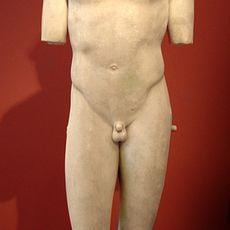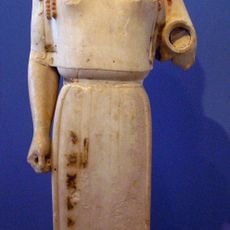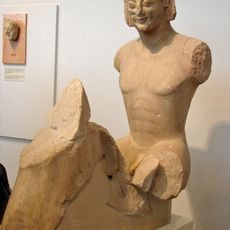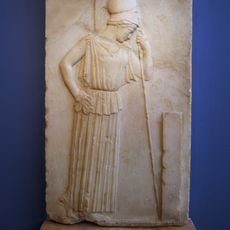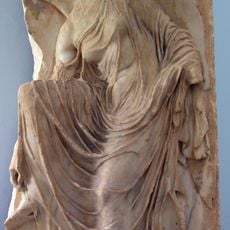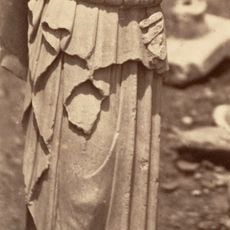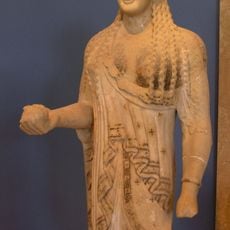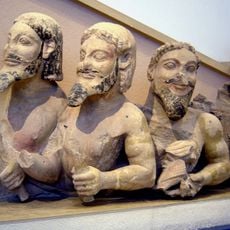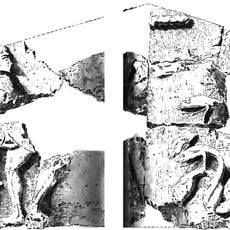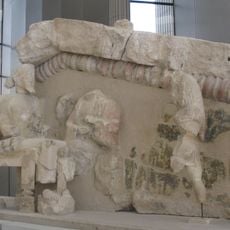
Antenor Kore, Marble statue at Acropolis of Athens, Greece
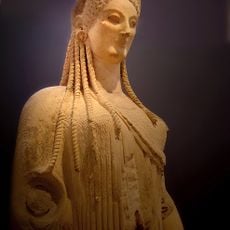
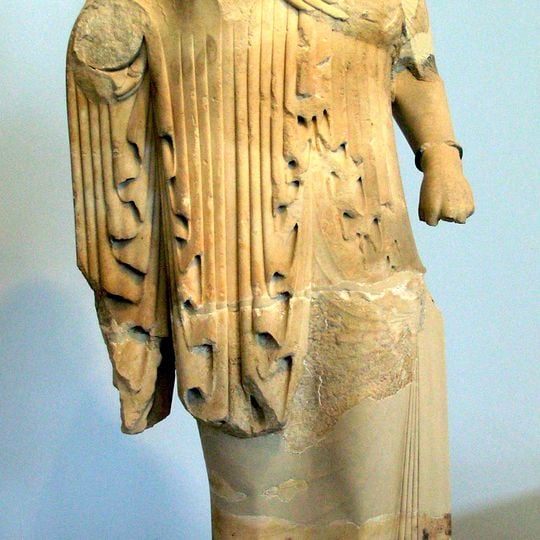
The Antenor Kore is a marble statue that stands just over 7 feet (215 cm) tall and depicts a standing female figure in ancient Greek dress. The sculpture displays carefully carved details such as the hair arrangement and the folds of fabric, which are characteristic of works from this early period.
The Antenor Kore was carved around 530–520 BC, the largest of the korai dedicated on the Athenian Acropolis. Its fragments lay in the Perserschutt, the layer of debris buried after the Persian sack of 480 BC. The lower part and left arm were dug up east of the Parthenon in 1882; the upper part and the inscribed base were found northwest of the Erechtheion in February 1886, and joining pieces followed in 1887.
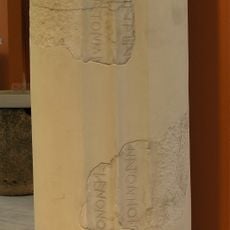
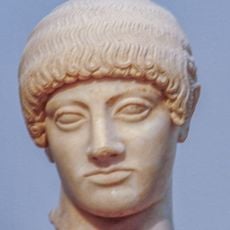
The base inscription names both the donor Nearchos, restored as a potter (kerameus), and the sculptor Antenor son of Eumares. Some scholars doubt that a simple artisan could fund such a large votive, but potters and vase painters are known to have made dedications on the Acropolis. The statue's empty eye sockets once held inlays, probably glass.
The statue is in the Acropolis Museum in Athens, inventory number 681, and stands 201 cm high without its plinth. Look for the empty eye sockets, once inlaid with glass or rock crystal, and the metal setting still preserved in the left eye. The Pentelic marble base, decorated with alternating red and green tongues, is displayed with it, though some scholars doubt the two belong together.
An inscription on the base reveals that a potter named Nearchos commissioned the statue and sculptor Antenor created it. This provides rare documentation of artistic collaboration in the ancient Greek world.
The community of curious travelers
AroundUs brings together thousands of curated places, local tips, and hidden gems, enriched daily by 92,846 contributors worldwide.