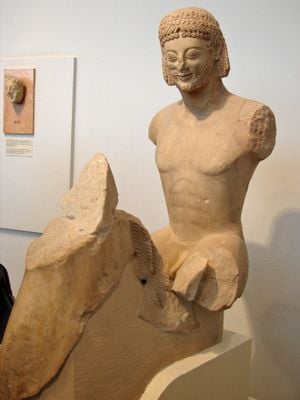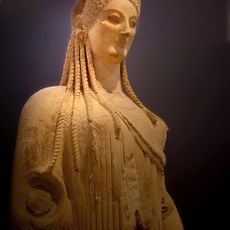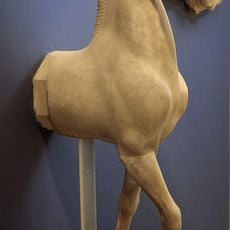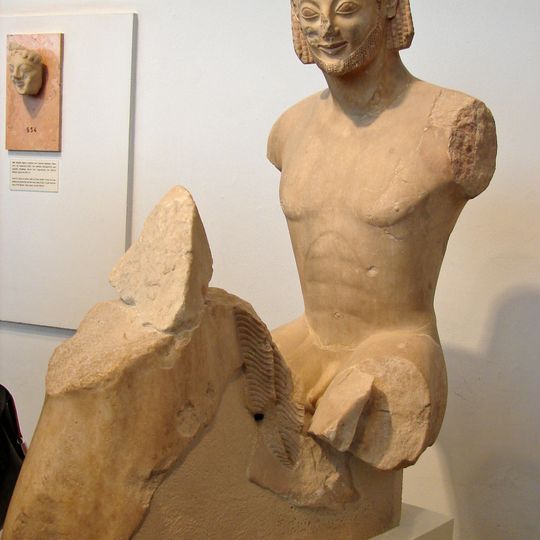
Rampin Rider, Marble equestrian statue in Athens, Greece
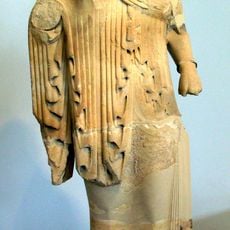
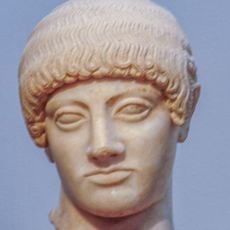
The Rampin Rider is an archaic Greek marble sculpture from the 6th century BC depicting a young man on horseback, and it is one of the best-preserved works of that period. The torso is kept at the Acropolis Museum in Athens, while the head, showing a faint smile and a wreath of oak leaves, is held at the Louvre in Paris.
The sculpture was made around 550 BC in an Attic workshop and was found in fragments near the Acropolis of Athens. The head came to light in 1877, and the torso was uncovered nine years later during further excavations on the same site.
The rider sits without a saddle or stirrups, which was the standard way Greek horsemen rode in ancient times. Owning and riding a horse was a sign of high social standing in Athens, and this figure makes that connection visible.
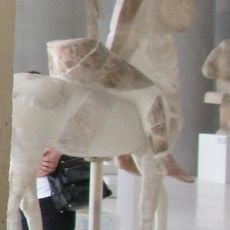
The torso of the rider is on display at the Acropolis Museum in Athens, located at the foot of the hill and easy to reach on foot from the main site. Going early in the morning or later in the afternoon helps avoid the largest crowds.
The head wears a wreath of oak leaves, which in ancient Greece was typically given as a prize for winning athletic games, suggesting the figure may represent a champion. The two separated parts were identified as belonging together only in the 1930s, thanks to a photograph taken by art historian Humfry Payne.
The community of curious travelers
AroundUs brings together thousands of curated places, local tips, and hidden gems, enriched daily by 91,279 contributors worldwide.