Mount Giona, Mountain peak in Central Greece
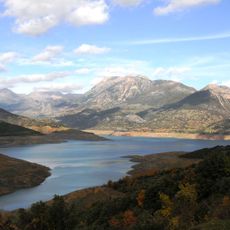
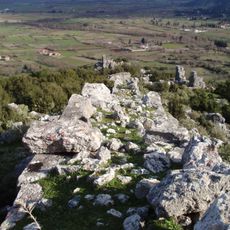
Mount Giona is a mountain in Phocis, Central Greece, between Parnassus to the east, Vardousia to the west and Oeta to the north. Its highest summit, Pyramida, reaches 2,510 m, making it the highest mountain south of Olympus. The mountain is split by the deep Reka gorge, and on its western side lies the Plaka tis Sykias face, a limestone wall with about 1,100 m of vertical relief.
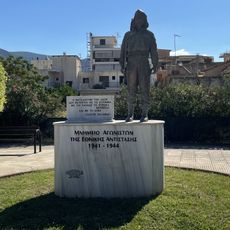
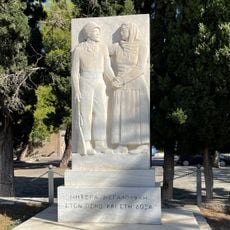
Known in antiquity as Aselinon Oros, the "moonless mountain", linked to the myth of the shepherd Endymion and the moon goddess Selene. In May 1821, during the Greek War of Independence, it was the site of a rout of Ottoman forces. In the Karouta battle of the German occupation, resistance fighters defeated the occupying troops on its slopes.
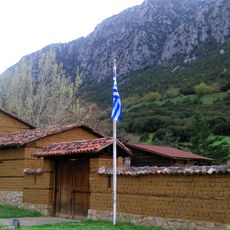
The name comes from the gkionis, a bird with large permanent populations on the mountain; Georgios Babiniotis gives Gkiona as the correct spelling. Villages such as Kaloskopi, Stromi, Lefkaditi and Agia Efthymia keep few year-round residents, who return in summer. Herders still use the springs and streams, and a forest village of 20 equipped huts at Prosilio, built by the Amfissa forestry office, hosts visitors.
Starting points for trekking are located near local villages where paths are generally accessible and guides are available. Visitors should bring sturdy footwear, water, and weather-appropriate clothing as conditions change quickly at higher elevations.
The mountain's name comes from the gkionis, a bird whose large populations live permanently on Giona, according to Georgios Babiniotis's Dictionary of the Modern Greek Language, which gives Gkiona as the correct spelling. In antiquity the massif was counted as part of Parnassus and called Aselinon Oros, the moonless mountain, after the myth of the shepherd Endymion and Selene.
The community of curious travelers
AroundUs brings together thousands of curated places, local tips, and hidden gems, enriched daily by 92,870 contributors worldwide.