Delphi, Archaeological site in Delfi Municipality, Greece
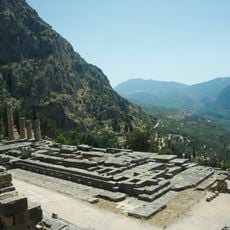
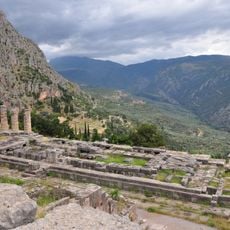
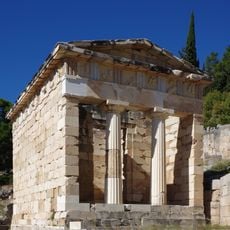
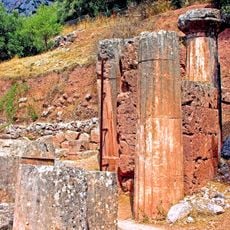
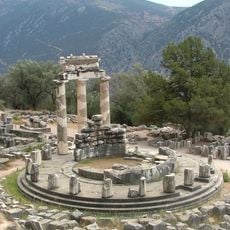
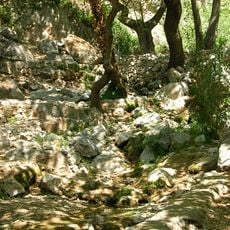
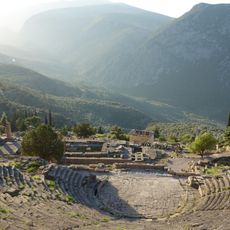
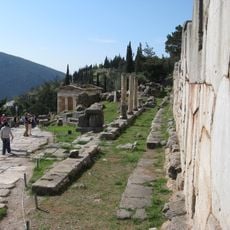
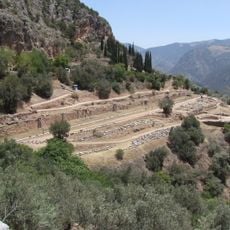
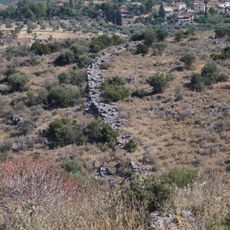
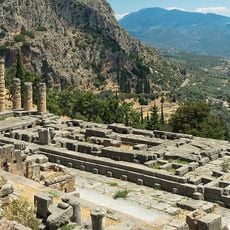
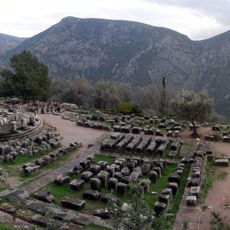
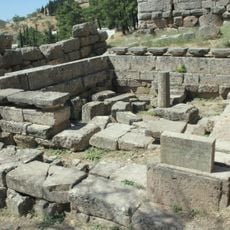
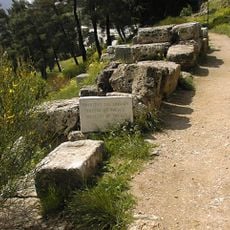
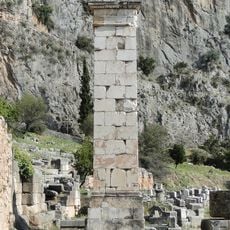
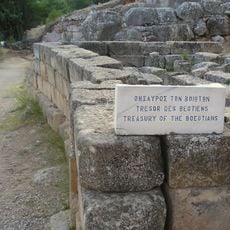
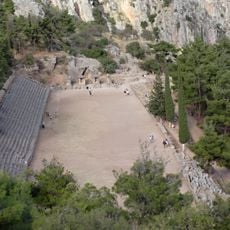
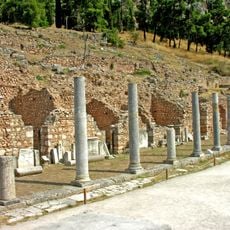
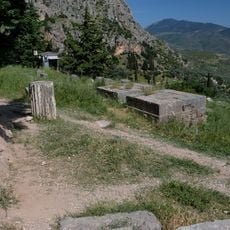
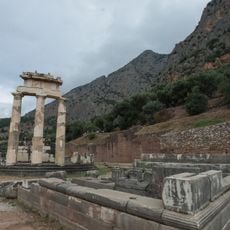
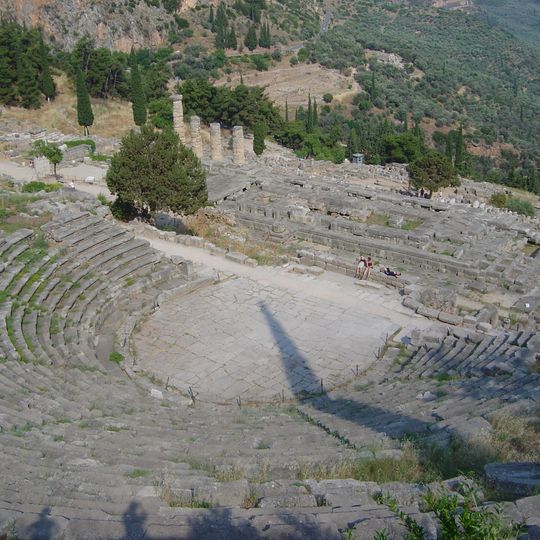
Delphi is an archaeological site on Mount Parnassus in Greece, bringing together temple remains, theaters, treasuries, and stone monuments across several terraces at around 570 meters (1870 feet) above sea level. The complex stretches along a steep slope and includes a colonnade, an ancient arena, and paved pathways that wind through the grounds.
Delphi's sanctuary grew from about 800 BCE, when a modest village called Pytho was replaced by the first altar and temple of Apollo. The temple was destroyed by the earthquake of 373 BCE and rebuilt between 370 and 330 BCE with funds collected across the Greek world; those ruins stand today. The edict of Theodosius in 392 ended the cult, and a Christian town occupied the site until roughly the 7th or 8th century.
The name Delphi shares its root with the Greek word for womb, delphys, while Pytho, the site's older name, is linked to Pythia and to Python, the serpent killed by Apollo. The Pythian Games, held here in Apollo's honour, brought athletes and musicians from across the Greek world. Visitors today can still see the stone tiers of the theatre and stadium where those contests took place.
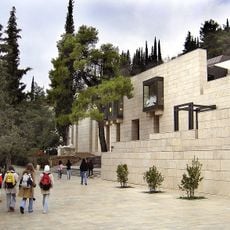
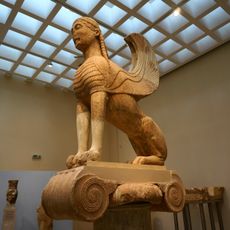
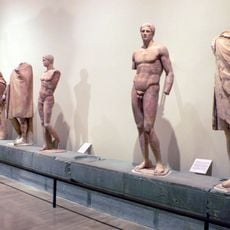
The site opens daily between 8 AM and 6 PM, and entry covers both the ruins and the museum galleries. The climb across the terraces is steep and uneven, so comfortable shoes and some time for breaks are advisable.
The Omphalos stone marker shows the spot ancient Greeks believed was the center of the world, after Zeus released two eagles from opposite ends of the earth to meet there. Today a replica stands at the location, while the original is kept in the museum.
The community of curious travelers
AroundUs brings together thousands of curated places, local tips, and hidden gems, enriched daily by 94,073 contributors worldwide.