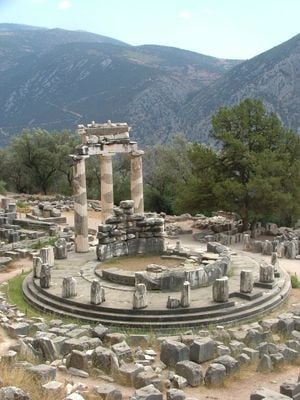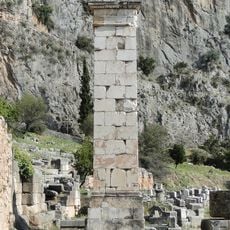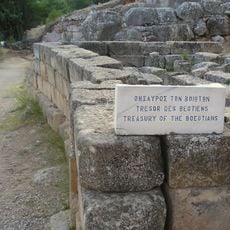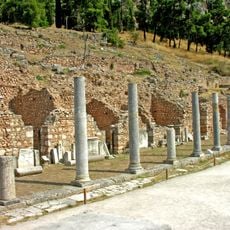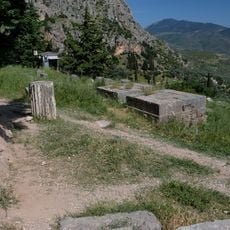
Tholos of Delphi, Circular temple in Delphi, Greece
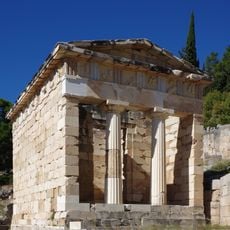
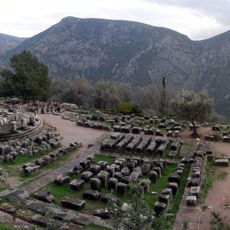
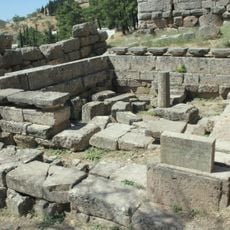
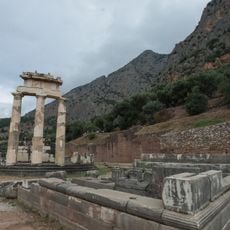
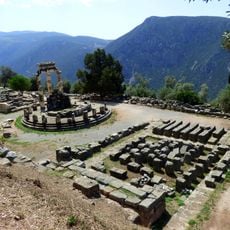
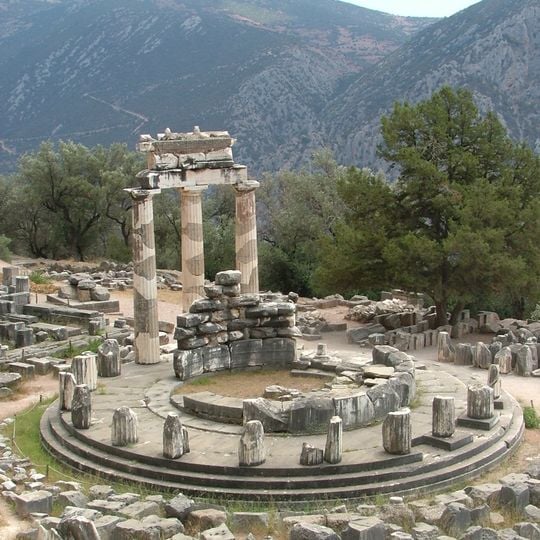
The Tholos is a circular temple featuring twenty Doric columns arranged in a ring, with interior Corinthian columns and marble decorative elements on its octagonal roof. The building combines Pentelic marble in its upper sections with limestone in its lower base, and displays ten interior half-columns fitted against curved walls.
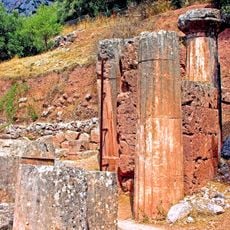
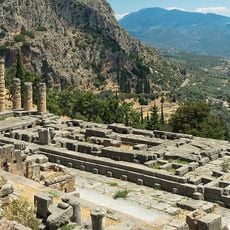
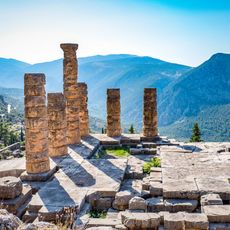
The Tholos was built between 400 and 375 BCE, or according to some datings between 380 and 370 BCE, within the sanctuary of Athena Pronaia. Vitruvius, in Book VII of De architectura, names Theodoros of Phocaea as its architect and notes that he wrote a book about the building. In 373 BCE an earthquake destroyed the sanctuary's temples; reconstruction began in 370 BCE but was interrupted by the Sacred Wars. The building was partially restored in 1938, when three columns and parts of the entablature were re-erected.
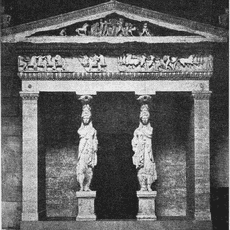
The carved panels on the building showed scenes of battles between Amazons and Centaurs from Greek myths. These images told stories about conflicts between civilization and wildness, themes that mattered deeply to ancient Greek people.
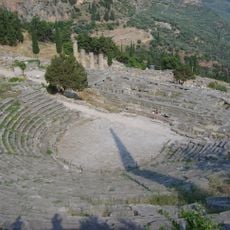
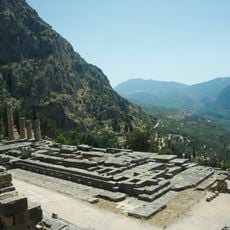
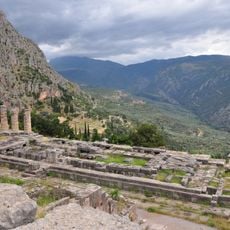
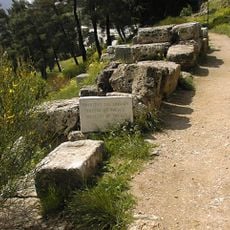
The tholos stands in the Marmaria terrace of the sanctuary of Athena Pronaia, about 1.5 km east of the main ruins of Delphi, on the south slope of Mount Parnassus. Visitors reach it by continuing past the sanctuary of Apollo along the road toward Arachova; the three restored columns and part of the architrave are visible from the east before the sanctuary comes into view.
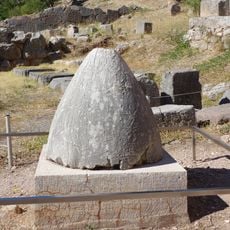
The building's function is unknown: it may have been a temple for a local hero or a circular treasury. In 1979 Vincent Scully argued that, more clearly than any other building at the site, it evokes the omphalos, the navel of the earth.
The community of curious travelers
AroundUs brings together thousands of curated places, local tips, and hidden gems, enriched daily by 93,215 contributors worldwide.