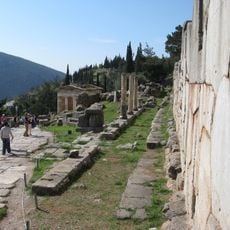
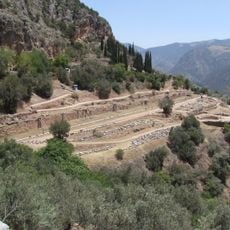
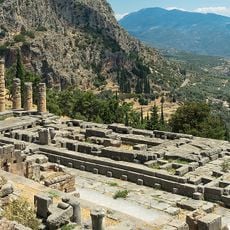
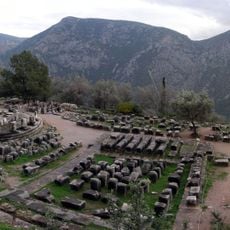
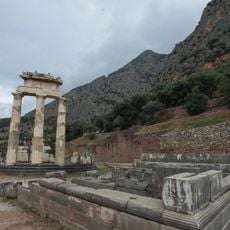
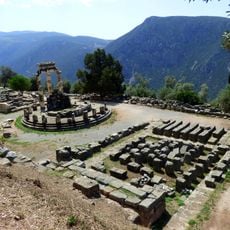
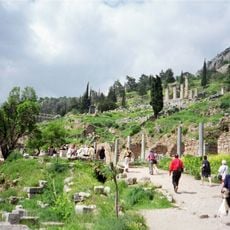
Phaedriades, Limestone cliffs near Mount Parnassos, Greece.
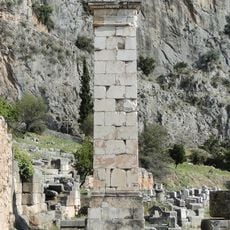
The Phaedriades are two parallel limestone walls rising roughly 700 meters above the archaeological complex at Delphi on Mount Parnassos' southern slopes. They frame a narrow valley where the ancient Castalian Spring emerges from between the rock faces.
These rock formations took shape during the Jurassic period, creating a landscape that existed long before human settlement in the region. In 480 BC, local legend linked them to an event involving large boulders that fell and shielded the sacred temples below.
The cliffs earned their name from the shining reflections their bright surface creates at midday when sunlight hits the rocks. For ancient Greeks, this natural gateway held spiritual importance as a passage between the earthly and divine realms.
Visitors access the cliffs through marked paths within the archaeological site, with several vantage points along the way. The valley is quite narrow and paths can be slippery depending on weather, so sturdy footwear and careful footing are important.
The dark limestone walls formed during the Jurassic period millions of years ago and display visible layers of geological history. The ancient Castalian Spring emerges from the narrow gap between the cliffs, a water source that pilgrims considered sacred in antiquity.
The community of curious travelers
AroundUs brings together thousands of curated places, local tips, and hidden gems, enriched daily by 90,765 contributors worldwide.