Castalian Spring, Sacred spring at Mount Parnassus, Delphi, Greece
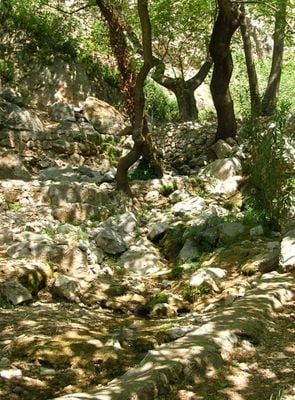
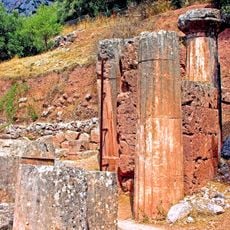
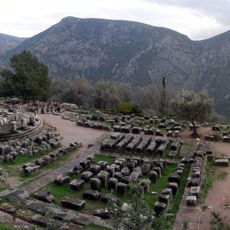
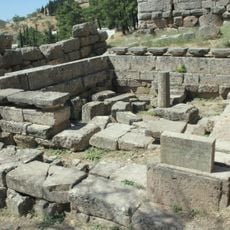
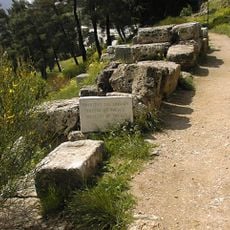
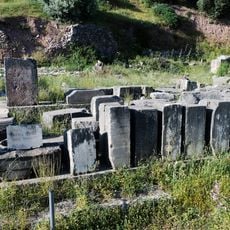
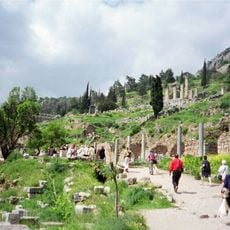
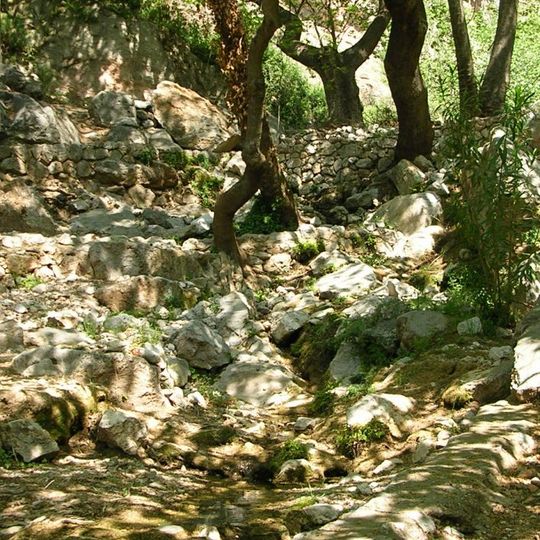
The Castalian Spring flows between two large rocks in a natural basin within the archaeological site of Delphi. Along the water's course, Roman and earlier fountain structures remain, showing how the spring was used over time.
The spring was an ancient purification site where pilgrims washed before entering the Apollo sanctuary. The Pythia, Delphi's oracle, also used the spring for rituals before delivering her prophecies.
The name comes from the nymph Castalia, daughter of the river Achelous and wife of the king of Delphi, or from a Delphic girl who plunged into the spring while fleeing Apollo. The spring stood in a grove of laurels sacred to Apollo, and its water was thought to stir poetic inspiration; the Castalian Band of poets at the court of James VI of Scotland took its name from it.
The spring lies in the ravine between the Phaedriades rocks, about halfway between Marmaria and the Apollo sanctuary, on the path up to the archaeological site. The archaic fountain was uncovered in Anastasios Orlandos's excavations of 1960, the later fountain after digs from 1878. The bed is rough limestone, so watch your footing where water crosses the stones.
The Castalian Band, a group of poets at the court of James VI of Scotland, took its name from this spring; the king himself was counted among them. The name also travelled to America: a spring in Tennessee, found by Isaac Bledsoe in 1772, gave the town of Castalian Springs its name in the 1830s.
The community of curious travelers
AroundUs brings together thousands of curated places, local tips, and hidden gems, enriched daily by 94,388 contributors worldwide.