Moní Panagías Eikosifoiníssis, Orthodox monastery in Amphipolis, Greece
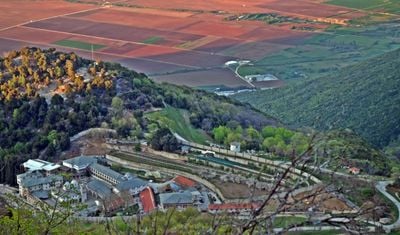
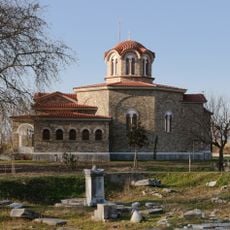
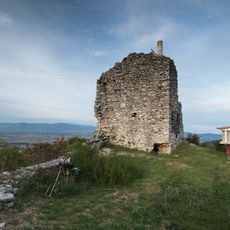
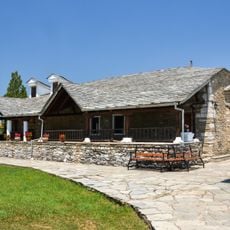
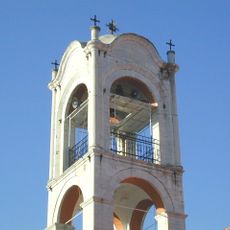
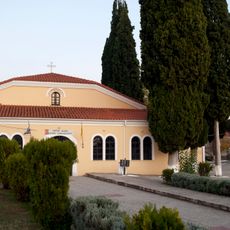
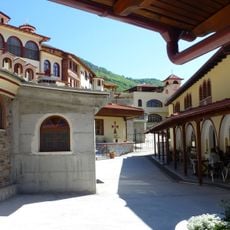
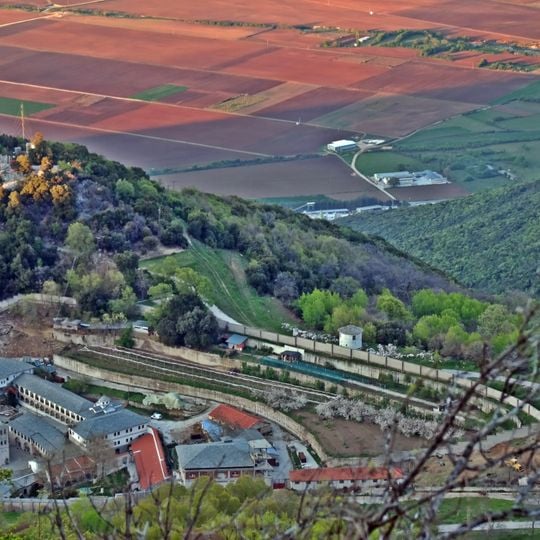
Panagia Eikosifinissa is an Orthodox monastery situated at 753 meters elevation on the northern slopes of Mount Paggaio in northern Greece. The site features several religious and residential buildings arranged around a central courtyard with commanding views across the surrounding landscape.
Tradition credits Bishop Sozon of Philippi, present at the Council of Chalcedon in 451, with founding a church and monastic settlement at Vigla around 450; this was abandoned, and the monastery was effectively founded by Saint Germanos in the 8th century, who arrived around 718. In 1472 the resigned Patriarch Dionysios I settled here and became its second founder. On 25 August 1507, Turks killed 172 monks and 30 pilgrims; ten Vatopedi monks came three years later to restore it.
The name is a folk etymology: it was refashioned from the earlier place-name Kosinitsa, from the Slavic košnica, "beehive". A tradition recorded by abbot Chrysanthos in 1782 says the icon of the Theotokos, sought by St Germanos, shone with a reddish ("phoinikoun") light, giving "Eikosifinissa". The monastery keeps that icon, and the Parakletikos Kanon of the Panagia Acheiropoietos was composed here in 1610 by Matthew, Metropolitan of Myra.
The monastery lies about 40 kilometers from Kavala and is reached by mountain roads that require sturdy footwear. Visitors should be aware that the site is actively used by a religious community, and major religious holidays such as the Feast of the Mother of God draw larger crowds.
The Life of Saint Germanos survives in codex 19 of the Laurentian Library in Florence. In 1898 Saint Prokopios Lazaridis, bishop of Amphipolis, was sent to the monastery as exarch of the Ecumenical Patriarchate to restore peace among the brotherhood; he later became Metropolitan of Ikonion and was martyred in Asia Minor in 1923.
The community of curious travelers
AroundUs brings together thousands of curated places, local tips, and hidden gems, enriched daily by 93,274 contributors worldwide.