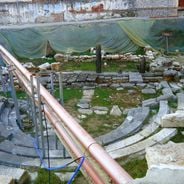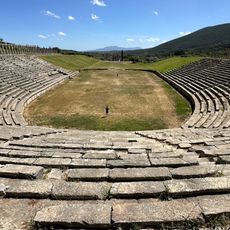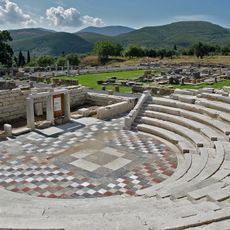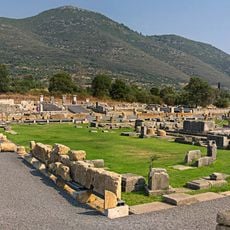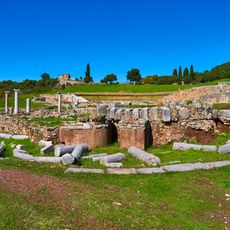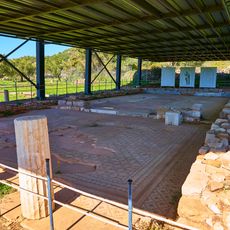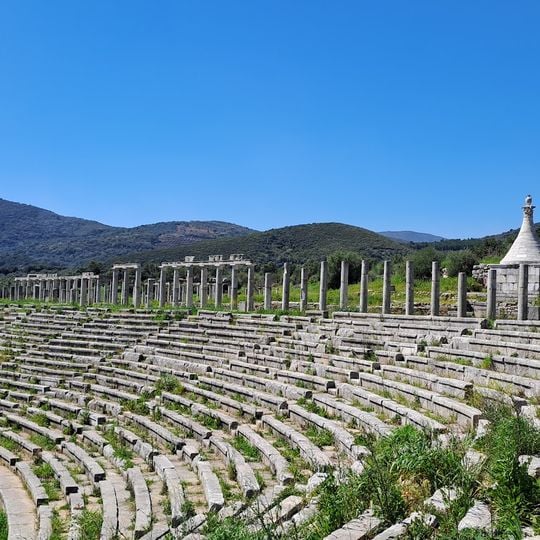
Theatre of Messene, Greek theatre in Archaia Messini, Greece.
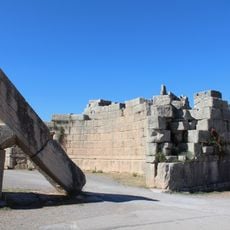
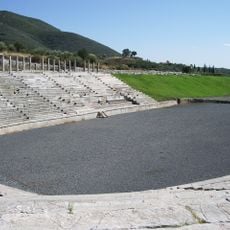
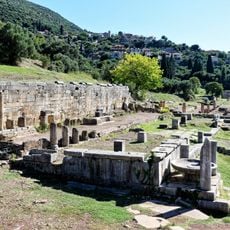
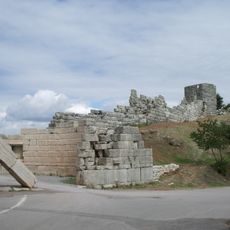
The Theatre of Messene sits north of a propylaeum leading to the Asclepieion, with a width of 106.83 m and an orchestra 23.56 m across. Its cavea rests on an artificial embankment held by a strong retaining wall, and stairways divide the seating into eleven cunei. The eastern parodos wall preserves ten rows of rectangular limestone blocks.
The theatre's life spans five phases from the 3rd century BC to the early Byzantine era. In its first phase the cavea was an artificial embankment held by a strong retaining wall, and the theatre hosted both performances and political assemblies. In the 1st century BC the movable stage was replaced by a first permanent stage building. Repairs under the benefactor Tiberius Claudius Saethidas are recorded on two marble statue bases.
In its first phase the theatre hosted both performances and political assemblies of the citizens. Two inscribed marble bases for honorific statues of the family of Tiberius Claudius Saithidas, set side by side in the third rectangular niche of the proscenium's east face, record his sponsorship of repairs in the third phase.
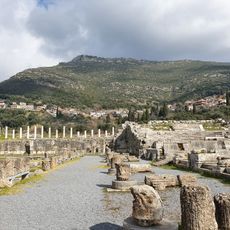
The theatre sits north of a propylaeum that leads to the Asclepieion complex, so the two are visited on the same walk. The eastern passage wall survives in ten courses of rectangular blocks, while only three courses remain of the western retaining wall. Ground between the orchestra and the upper platform is uneven.
The theatre's position follows the slope so precisely that sound from the stage carried clearly to the highest rows. This acoustic benefit was not by chance but the result of careful construction planning.
The community of curious travelers
AroundUs brings together thousands of curated places, local tips, and hidden gems, enriched daily by 93,948 contributors worldwide.