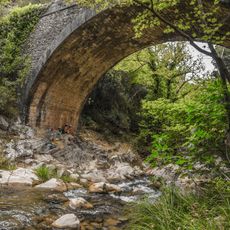
Church of Hagia Theodora, Byzantine church in Vastas, Greece
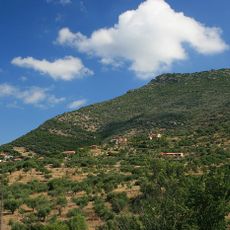
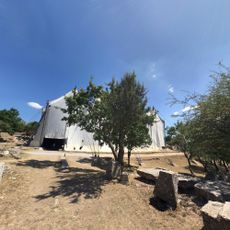
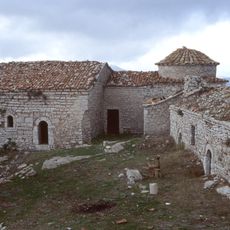
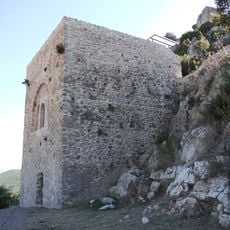
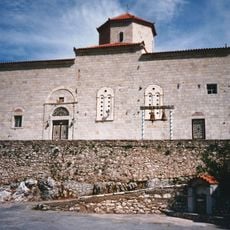
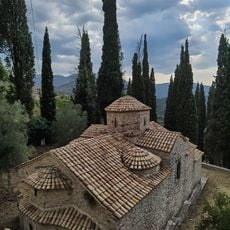
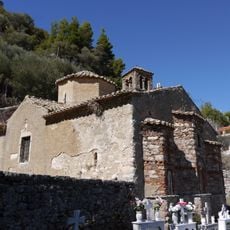
The church of Hagia Theodora is a Byzantine place of worship located in a mountain ravine within Megalopoli Municipality. The building displays typical features of medieval Byzantine architecture with its solid stone walls and characteristic structural forms.
The stone church is of Byzantine date, though the sources give no exact year. Local tradition links it to Augusta Theodora, daughter of Constantine VIII, said to have ruled as a man in 1055–1056; another account holds that Michael VI had her killed and buried here. The legend of the female martyr disguised as "Captain Thodoris" and executed on this spot grew around the building. In 1996 the University of Patras surveyed the walls with ground-penetrating radar, and restoration followed in 1998–1999.
Local tradition holds that the seventeen oaks on the roof correspond to the years of Saint Theodora, who, disguised as a man, was executed on this spot. The church celebrates her feast on 11 September, when pilgrims gather at the ravine.
The church stands in a ravine near the village of Vasta, reached by a local road; the final approach is on foot. The interior is small and dim, and the stone bench along the facade is the only seating. The roof was re-covered with slate tiles during the 1998–1999 restoration, so the trees grow from a renewed surface.
The roof of the building supports approximately seventeen trees that have grown directly from the stone surface. These plants have adapted remarkably to their vertical location and thrived despite this unusual setting.
The community of curious travelers
AroundUs brings together thousands of curated places, local tips, and hidden gems, enriched daily by 93,828 contributors worldwide.