Ancient Theater of Megalopolis, Greek theater in Arcadia region, Greece.
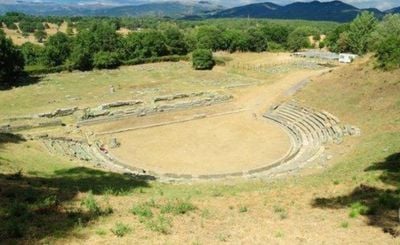
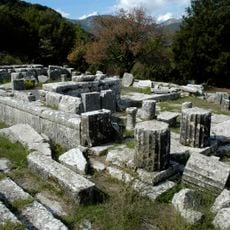
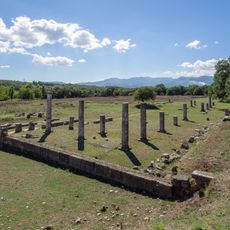
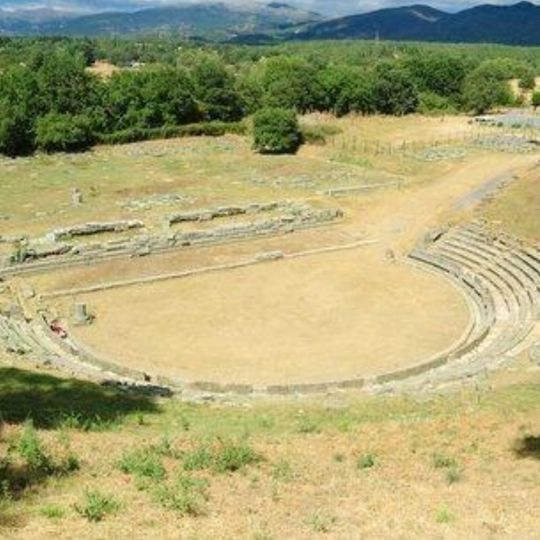
The Ancient Theater of Megalopolis is a Greek theatre, not an amphitheatre: its ruins lie in the southern part of the archaeological area and open northward. The cavea is about 145 m in diameter, with 20 lower and 17 upper rows of seats; the orchestra measures about 30 m across. The stage was wooden, about 31 × 7 m, and rolled into a skenotheke.
Built around 370 BC, the theater became a cornerstone of Megalopolis as it grew into a major regional center. Its construction reflected the city's ambitions to become a gathering place for politics and shared civic life.
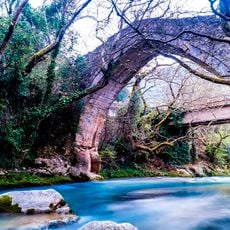
The theatre hosted the federal assemblies of the Arcadian League, since Megalopolis was its capital. Pausanias, who visited in the 2nd century AD, called it the largest theatre in ancient Greece. Local tradition holds that its seats were later removed to build or support bridges.
The ruins lie in the southern part of the archaeological area and open toward the north. Excavations by the British School at Athens from 1890–1891 uncovered mainly the orchestra, the proskenion, the skenotheke and the first rows of seats, so expect a partial rather than a complete cavea. The site is an open excavation with uneven ground.
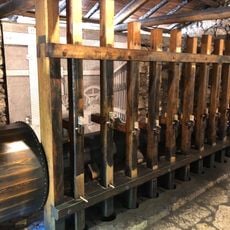
The stage was made of wood and mounted on wheels, about 31 by 7 metres, and kept in a separate building called the skenotheke, rolled out only for performances. Pausanias, who visited in the 2nd century AD, called it the largest theatre in ancient Greece.
The community of curious travelers
AroundUs brings together thousands of curated places, local tips, and hidden gems, enriched daily by 93,940 contributors worldwide.