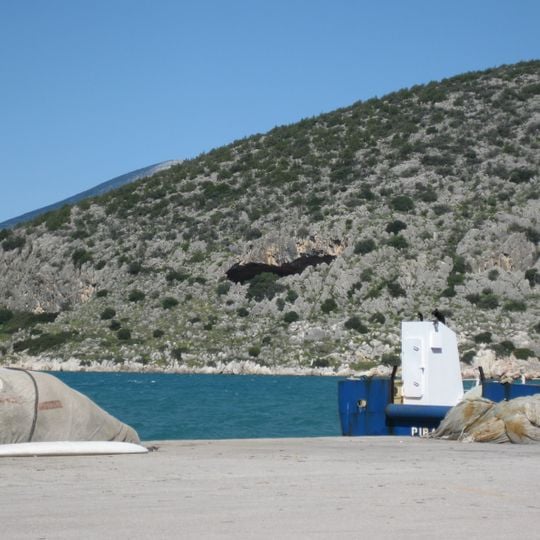
Franchthi Cave, Archaeological site in Koiladha Bay, Greece
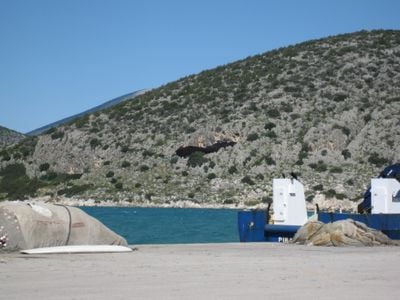
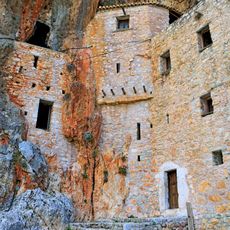
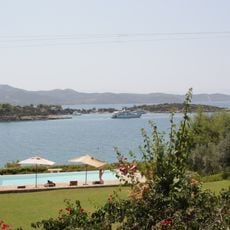
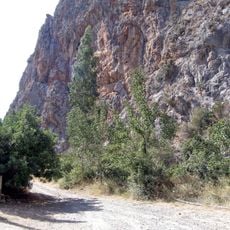
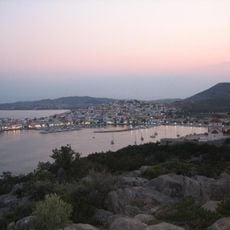
Franchthi Cave is an archaeological site in Ermionida Municipality, Greece, opening onto the northern shore of Koiladha Bay. The cavity extends roughly 150 meters (490 feet) into the limestone rock and contains several chambers with successive layers of human occupation.
People inhabited the cave from the late Upper Paleolithic through the Neolithic period, covering roughly 37,000 years. Use ended around 3000 BC, when settlements in the region gradually moved to the surface and into nearby villages.
Excavations revealed some of the earliest evidence of farming and animal herding in Greece, with remains of grain and domesticated species found in the later layers. Fish bones and shells recovered from the site show that people relied heavily on the sea while gradually shifting from hunting to raising livestock.
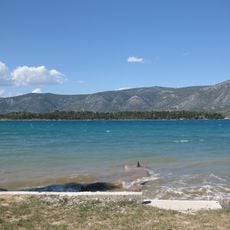
Access follows a path from Koiladha village, with sturdy footwear recommended due to uneven terrain. The bay itself can be explored from the shore in calm weather, though many remains lie underwater.
Obsidian from Melos, an island more than 100 kilometers (62 miles) away, confirms early seafaring skills among inhabitants. Remains of tuna indicate they also practiced offshore fishing rather than staying solely near the coast.
The community of curious travelers
AroundUs brings together thousands of curated places, local tips, and hidden gems, enriched daily by 91,269 contributors worldwide.