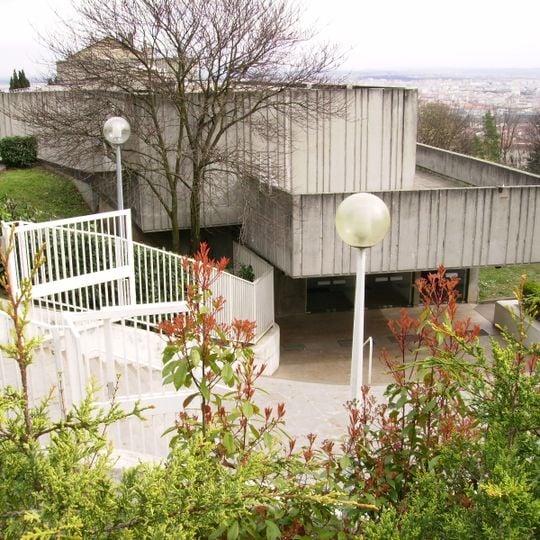
Lugdunum Musée et Théâtres, Archaeological museum in 5th arrondissement of Lyon, France.
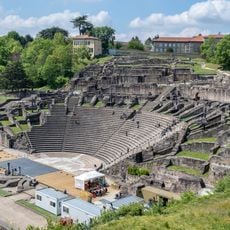
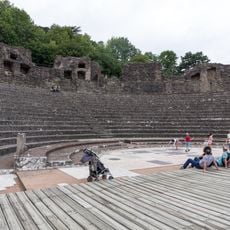
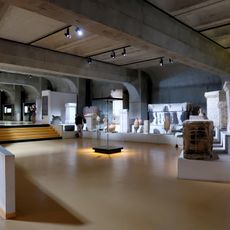
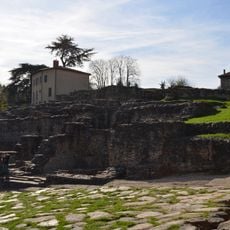
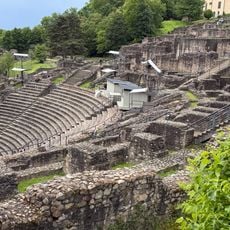
Lugdunum is an archaeological museum built into the slope of Fourvière hill, next to the Roman theatre and odeon. Its stacked concrete volumes, designed by Bernard Zehrfuss, have vertically grooved walls, a flat roof with a solid parapet and a deep overhang above dark ground-level bays. Inside, a concrete spiral ramp descends and branches into the display rooms.
The Antiquarium, a three-room museum near the theatres, closed in 1969 and was demolished; its collections were stored on rue Roger-Radisson. The current building, designed by Bernard Zehrfuss, was built from 1971 and inaugurated on 15 November 1975. It was renamed Lugdunum in November 2017, when the Roman theatres were attached to it.
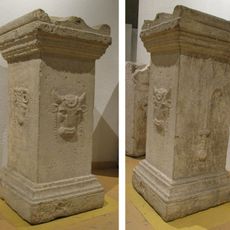
The museum keeps the Coligny calendar, a Gallic lunar calendar in fragments, and the Lyon Tablet recording Claudius's speech granting Gauls access to the Senate. The Circus Mosaic, found in Ainay in 1806, shows a chariot race, though the city's own circus has never been located. The silver Lyon cup bears images of Gallic gods.
The entrance sits at the top of Fourvière hill beside the Roman theatre and odeon, and the visit descends through the building along a concrete spiral ramp, so you end lower than you began. The ramp branches into the display rooms; allow time for the slope and the return uphill.
The museum's spiral ramp descends through five levels of concrete, each opening onto display rooms; the building was designed by Bernard Zehrfuss and opened on 15 November 1975. The Lyon Tablet, a bronze plaque recording a speech by Emperor Claudius, is among the pieces moved here from the Antiquarium, which closed in 1969.
The community of curious travelers
AroundUs brings together thousands of curated places, local tips, and hidden gems, enriched daily by 92,873 contributors worldwide.