Sanctuary of Cybèle, Roman archaeological site in 5th arrondissement of Lyon, France.
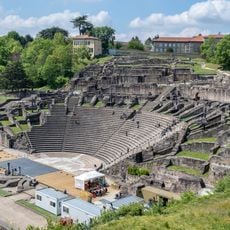
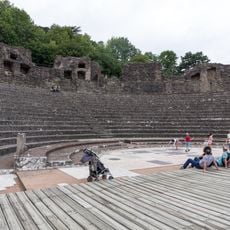
The Sanctuary of Cybele, also called the insula basilicale, is a Roman complex on the slope of Fourvière above the ancient theatre. Its dark, roughly cut stone blocks form broad staggered tiers, with a wide paved surface of pale flat stones at the lowest level and thick walls with rectangular recesses above. The masonry is weathered and mossy, and parts of the upper tiers are covered with flat grassy ground.
Excavations between 1965 and 1978 uncovered structures dating to around 20 BCE, initially interpreted as a sanctuary dedicated to the goddess Cybele. The findings later showed that this location served a more complex role in the early Roman settlement than first believed.
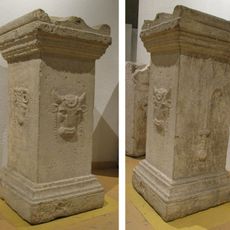
The name "Sanctuary of Cybele" comes from a taurobolic altar found in 1704 in the vines of a Monsieur Bourgeat, the oldest known object of Cybele's cult in Gaul, dated to 160 CE. Later excavators linked it to the ruins, but Armand Desbat's 1990s soundings identified a wealthy domus and a later public building instead. The site also preserves a row of six shops under a portico along a street climbing from the Porte de Narbonnaise.
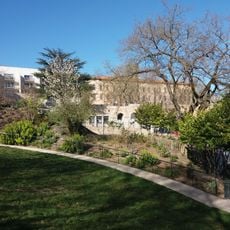
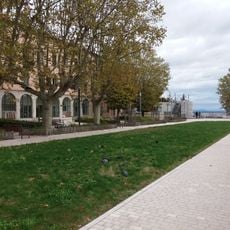
The ruins sit on the slope of Fourvière directly behind the Roman theatre, reached on foot from the Saint-Just district; the ground is uneven, with staggered tiers and grass between the paving stones. The western facade was destroyed by a double cistern, so the entrance side no longer survives. Allow time to walk between the insula, the theatre and the odeon.
A water storage system connected to an aqueduct supplied the ancient city of Lugdunum through settling basins in the western section of the complex. This sophisticated water management reveals how carefully the Romans engineered their infrastructure.
The community of curious travelers
AroundUs brings together thousands of curated places, local tips, and hidden gems, enriched daily by 92,976 contributors worldwide.