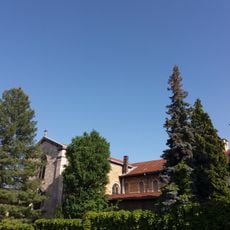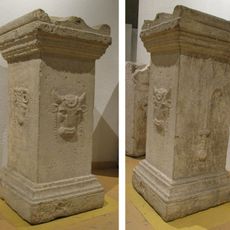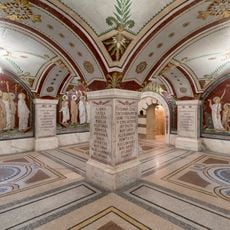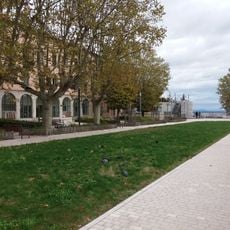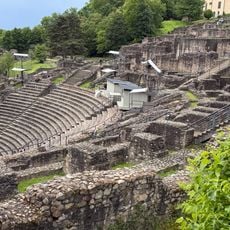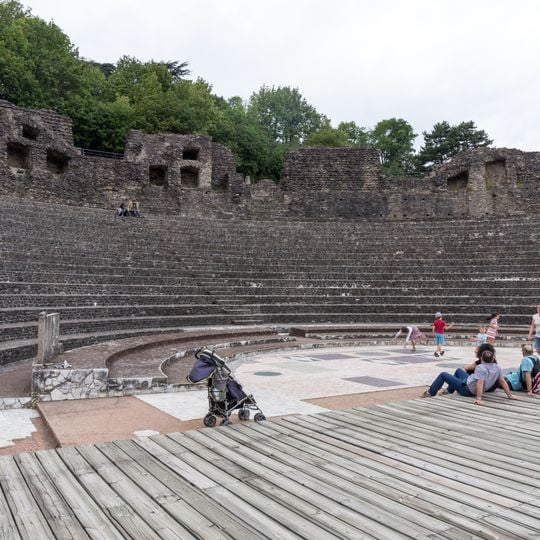
Odeon of Lyon, Roman archaeological site in Fourvière hill, Lyon, France.
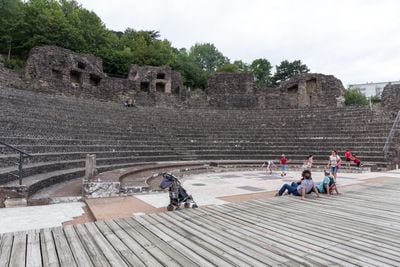
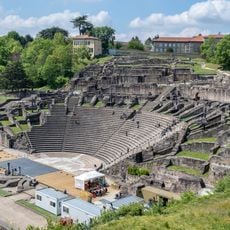
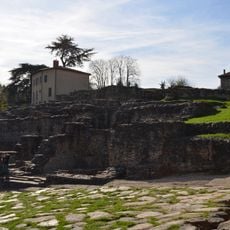
The Odeon of Lyon is a Roman archaeological site on Fourvière hill in the 5th arrondissement of Lyon, France. It is a semicircular structure with stone seating arranged in tiers around a round stage floor, known as the orchestra, at the base.
The odeon was built in the early 2nd century, when Lugdunum, the Roman name for Lyon, was one of the most important cities in Gaul. It was buried for centuries and only fully uncovered through excavations in the 20th century.
The odeon took its name from the Greek word for a roofed hall for song, and it hosted musical performances, public readings and meetings of the city's decurions. Medieval documents called the surviving ruins the "Caverna" or "grossa massa sarracenorum", the caves of the Saracens. In the 16th century scholars debated whether the arc-shaped walls were a theatre or the amphitheatre of the martyrs of 177.
The odeon sits right next to the Ancient Theatre of Fourvière, so both sites can be seen in one visit without much walking. The area is open-air, so comfortable shoes are useful for moving around the uneven stone surfaces.
The odeon and the nearby Ancient Theatre form one of the very few known pairings of these two building types found at a single site in ancient Gaul. What also stands out is the surviving geometric pattern of the orchestra floor, made from different colored stones, which is still visible today.
The community of curious travelers
AroundUs brings together thousands of curated places, local tips, and hidden gems, enriched daily by 93,896 contributors worldwide.