Commana parish close, Parish close in Commana, France.
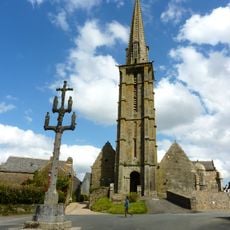
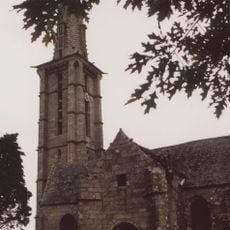
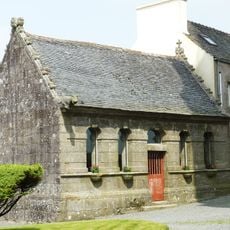
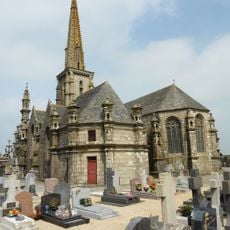
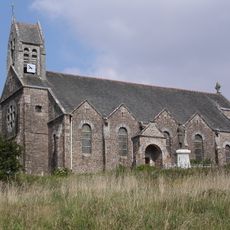
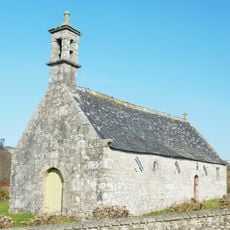
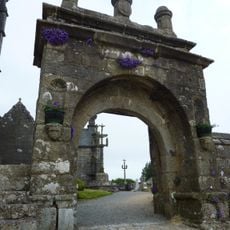
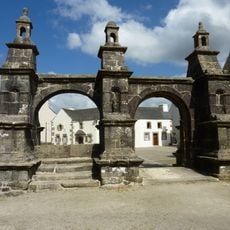
Commana parish close is a religious complex surrounded by walls that contains several interconnected structures typical of Breton churches of its era. The ensemble includes the church building, an ossuary, two stone calvaries that stand in the courtyard, and a monumental gateway marking the entrance.
Construction of the parish close began in 1592, the date carved at the base of the bell tower, which rises 57 metres. The church itself dates to 1645, when work on the Renaissance porch started; three inscribed dates record its stages: 1645, 1650 and 1653. The ossuary was added between 1677 and 1687, and the sacristy in 1701. The church, ossuary, calvary and triumphal arch were listed as historical monuments on 17 July 1915.
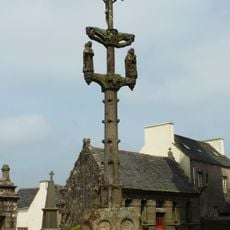
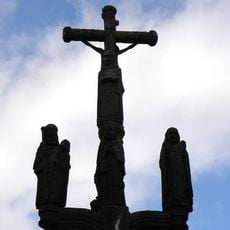
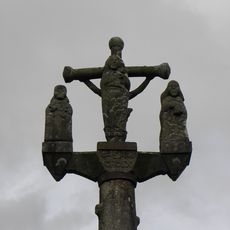
The older calvary, dated 1585 and 1742, stands between the triumphal arch and the south porch; a Mary Magdalene figure sits at the base of the cross, with an angel and devil below the crucifix and Saint Sebastian with archers on the reverse. The 1624 calvary by Roland Doré, six metres high, stands in the cemetery and carries a monk with a book on its reverse.
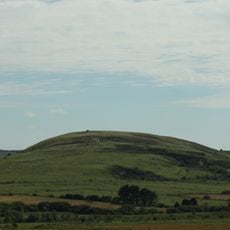
The complex stands on one of the highest hills of the Léon, at 262 metres altitude, so the ground around the church is uneven and the tower is visible from a distance. The bell tower rises 57 metres above the massive tower base. The calvaries stand in different spots: the Doré calvary in the cemetery, the older one between the triumphal arch and the south porch.
The Saint Anne altarpiece in the north nave measures 6.20 metres wide and 8 metres high and was built in 1682; its gilding was done in 1691 by Pierre de Lesmeur, a master painter and gilder from Huelgoat. The De Bouvans, lords of Bois de la Roche, have their coat of arms on the keystone between the side niches.
The community of curious travelers
AroundUs brings together thousands of curated places, local tips, and hidden gems, enriched daily by 92,952 contributors worldwide.