Oppidum d'Entremont, Celtic oppidum archaeological site in Aix-en-Provence, France
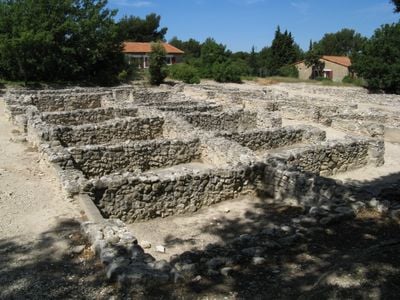
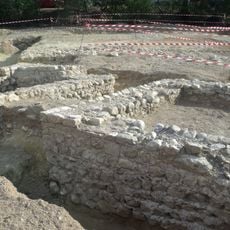
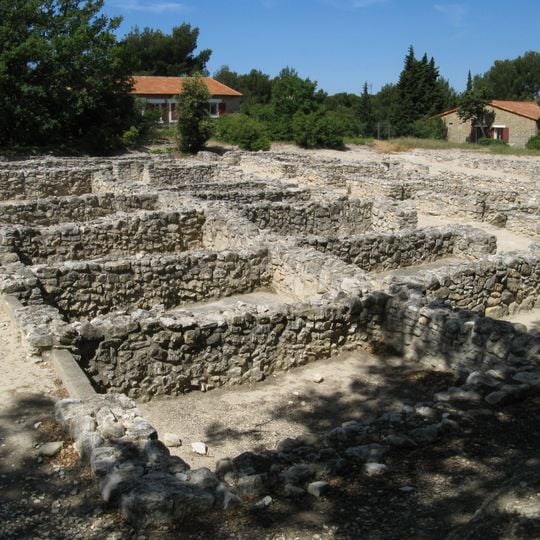
Entremont is a 3.5-hectare archaeological site on a triangular plateau at the southern end of the Puyricard plateau, 3 km from Aix-en-Provence. Its summit reaches 367 m, with cliffs on the south side above the Arc valley. Two walled settlement areas, Habitat 1 and Habitat 2, occupy the plateau; low walls of rough grey stone blocks outline rectangular enclosures on bare ground.
Entremont was settled between 180 and 170 BC as the capital of the Salyes, a Celto-Ligurian confederation. In 123 BC the Roman army of Gaius Sextius Calvinus took the oppidum; its king Teutomalios fled to the Allobroges. The inhabitants moved down to the new Roman city of Aquae Sextiae, and by 90 BC the plateau was completely uninhabited.
The name Entremont appears only in the Middle Ages, as Antremons, Latinised as Intermontes; it likely comes from the Tramonto family, who owned a tower on the southern slope, though a 1233 act cites Intermundo. The Salyes' own name for their town is unknown. Excavations in the 1940s yielded seated male figures, probably heroised warriors, each resting a hand on a severed enemy head, plus female figures and horses, all carved from local fine-grained limestone with traces of original paint.
Visitors should wear comfortable shoes since the site sits on elevated terrain with uneven ground throughout. Access is on foot, and early morning or late afternoon visits offer the best light for exploring the ruins and understanding the layout.
Excavations uncovered carefully carved stone sculptures depicting human faces and figures, reflecting the artistic skills of these early communities. The best examples now rest in the Musée Granet in Aix-en-Provence, revealing surprising sophistication in their visual culture.
The community of curious travelers
AroundUs brings together thousands of curated places, local tips, and hidden gems, enriched daily by 92,903 contributors worldwide.