Roman amphitheater of Fréjus, Roman amphitheater in Fréjus, France.
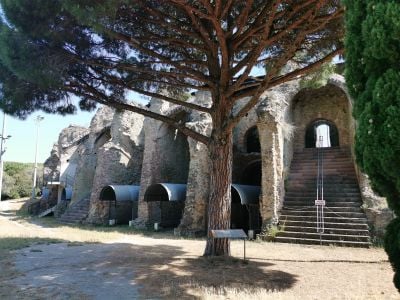
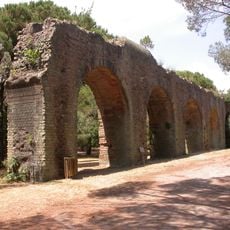
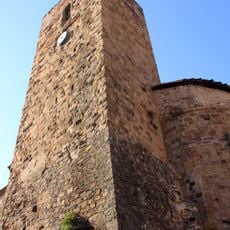
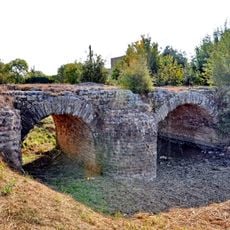
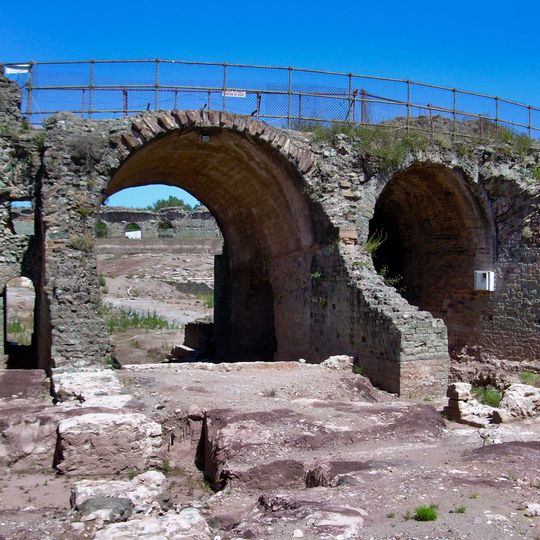
The Roman amphitheater of Fréjus stands west of the old town, its northern half resting against a sandstone hill. Most of the masonry is small green sandstone blocks (opus vittatum) from a quarry at La Baume, with brown sandstone for the seating and the large base blocks of the vanished facade. Radiating walls and sloping vaults that carried the cavea survive; since 2009-2012 a modern concrete structure reproduces the seating geometry above the ruins.
The construction date is not firmly established: a stamped brick reading "Castoris" suggests the 20s–30s AD, but it may be reused, and scholars place the building between the late 1st and early 2nd century. It was built outside the town wall to the west, its northern half resting against a sandstone hill. Serious excavations began in 1828 under architect Charles Texier, and the amphitheatre was classified as a monument historique in 1840.
The amphitheater served as a gathering place where fights and performances shaped public life and demonstrated Rome's importance in the region. People from across the city came together to watch and experience their connection to Roman culture.
The site is accessible from the outside and can be visited at different times depending on the season. It is wise to wear comfortable shoes and prepare for uneven surfaces and stairs that are part of exploring this location.
The arena was half-buried until December 1959, when the rupture of the Malpasset dam sent floodwater through Fréjus and scoured the earth from the structure. The 2009-2012 renovation added a concrete shell above the ruins, reproducing the cavea's geometry without concealing the ancient masonry.
The community of curious travelers
AroundUs brings together thousands of curated places, local tips, and hidden gems, enriched daily by 93,124 contributors worldwide.