Puy de Sancy, Volcanic peak at Massif Central, France.
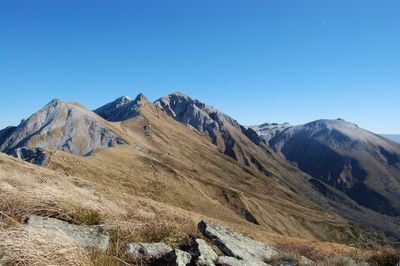
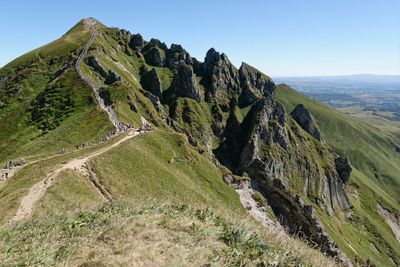
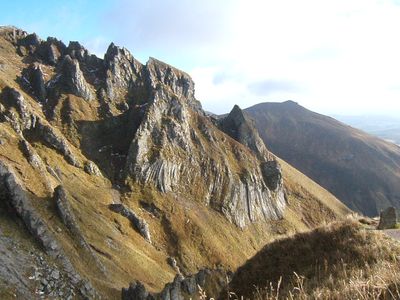
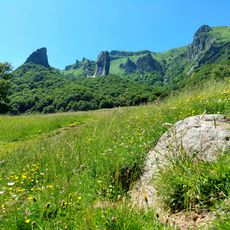
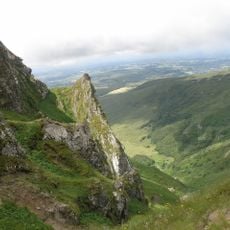
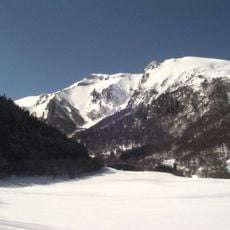
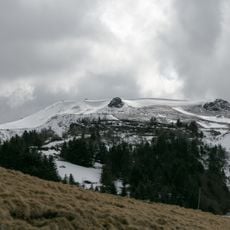
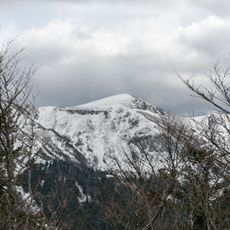
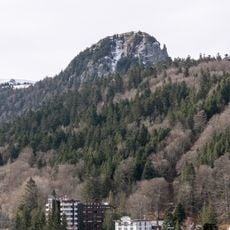
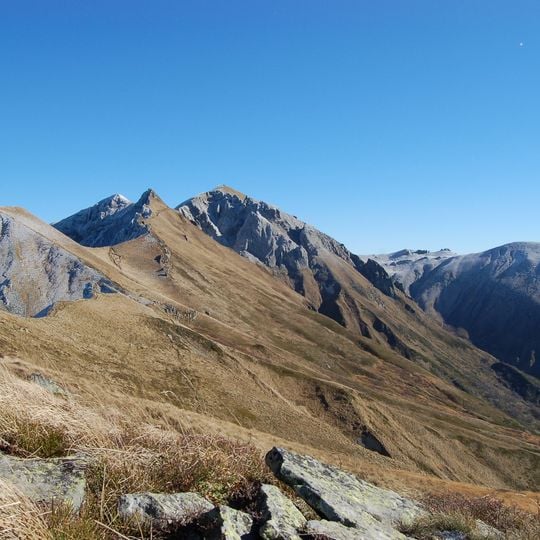
Puy de Sancy is an extinct volcano in Auvergne rising 1,885 meters above sea level, surrounded by four valleys that radiate from its slopes. The sides are covered with grassland and volcanic rock, while the summit area appears bare and windswept.
The summit is the neck of the Monts Dore stratovolcano, built on its southern flank between 1 and 0.2 million years ago, when it may have stood about 2,500 m high. Landslides and glacial erosion then cut it down to its present form; the volcano has been inactive for roughly 220,000 years. A pilgrimage to the summit was held on Saint-Sixte's day, 6 August, drawing parishioners from Saint-Donat and neighbouring communes.
The name Sancy comes from the dialectal form San Ci, from Latin Sanctus Cyricus, patron of a church attested in 1096 near Mont-Dore. The summit was long called Mondor, after the early medieval estate, and only from 1786 onward was it called puy de Sancy. In Occitan it is Puèi de la Crotz, recalling a monumental cross once standing on top.
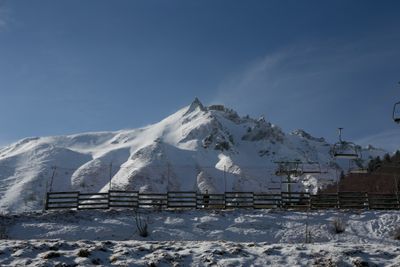
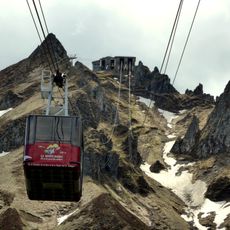
A chairlift carries visitors up to 1,780 meters (about 5,840 feet), from where a broad path leads to the viewing platform in around twenty minutes. The summit is clearly visible in fair weather, but fog and wind can reduce visibility considerably.
The Dore and the Dogne both rise on the mountain slopes and merge a few kilometers away to form the Dordogne, one of the longest rivers in France. Paragliders regularly use the updrafts at the summit for flights over the valleys.
The community of curious travelers
AroundUs brings together thousands of curated places, local tips, and hidden gems, enriched daily by 93,487 contributors worldwide.