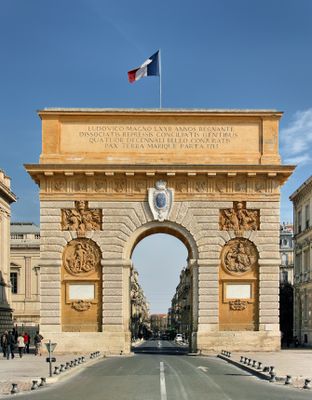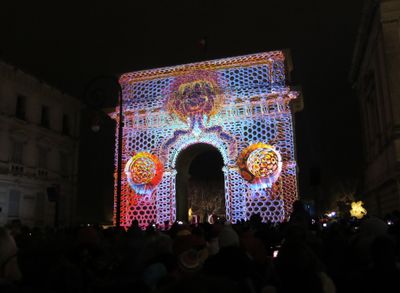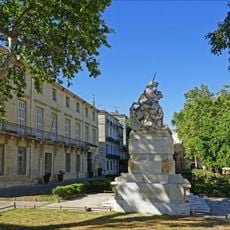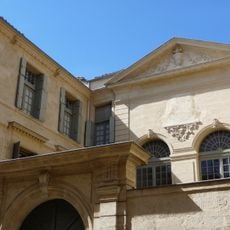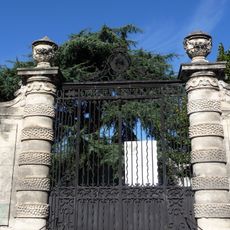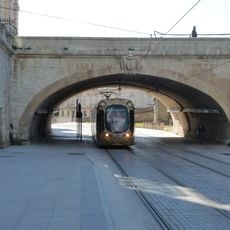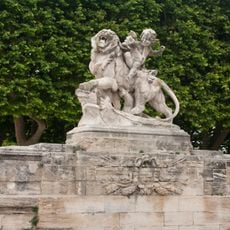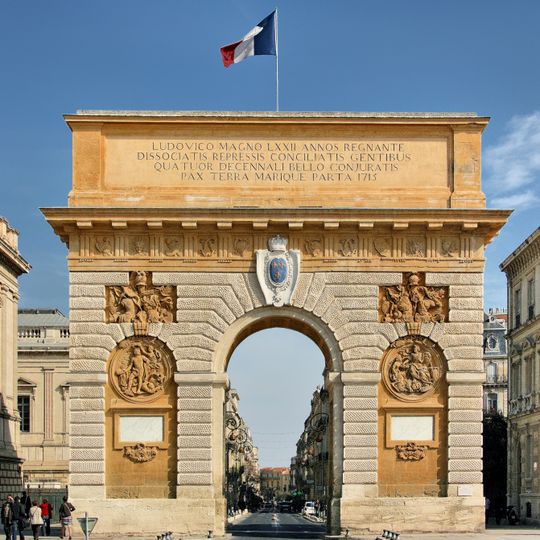
Gate of Peyrou, Triumphal arch near Peyrou Gardens, Montpellier, France.
The Porte du Peyrou is a triumphal arch at the eastern end of the Jardin de Peyrou, 15 metres high and 18 metres wide, with a central opening 4.70 metres wide and 7 metres high. Its lower facade is rusticated with deep horizontal grooves, the upper section smooth ashlar, and a Doric entablature crowns the whole. A white stone shield with a blue and gold coat of arms sits above the arch, flanked by carved trophies; each pier carries a circular relief medallion and an inscribed plaque.
Architect François Dorbay completed this structure in 1693, drawing design ideas from similar gateways built in Paris. Its construction marked a major urban planning effort in Montpellier during the reign of Louis XIV.
The gate's carved panels tell stories of Louis XIV's greatest achievements, from major construction projects to military triumphs of his era. These sculptural details serve as a visual record of what mattered to France at that time.
The arch stands at the eastern end of the Jardin du Peyrou, on one of the highest points of the city at 52 metres. It is reached from the old town across the stone Pont Vialleton, 28 metres wide, which replaced the drawbridge over the moat of the "commune clôture". The arch itself is a passage, not a viewpoint with steps.
The arch was built for 11,850 livres, and its stone came largely from the garrigues around Montpellier, including quarries at Pignan, Saint-Jean-de-Védas, Pondres and Saint-Geniès-des-Mourgues. More than 120 m³ of stone was extracted for it. Before the arch stood here, a drawbridge crossed the ditch marking the walls of the "commune clôture".
The community of curious travelers
AroundUs brings together thousands of curated places, local tips, and hidden gems, enriched daily by 94,335 contributors worldwide.