Besançon Astronomical Observatory, Astronomical observatory in Besançon, France.
The Besançon Astronomical Observatory stands on Avenue de l'Observatoire in the Montrapon-Fontaine-Écu district. Its cylindrical stone tower has a pale grey dome, rough light-coloured stone blocks on the lower two-thirds, and a smooth pale grey upper section. A thin pipe runs down the front, two rectangular windows are set one above the other, and a squat rectangular annex adjoins the tower on the right.
A presidential decree of 20 December 1878 created the astronomical, meteorological and chronometric observatory, and Jean-François Saint-Loup was named first director on 16 January 1879. The architect Étienne-Bernard Saint-Ginest saw his plans approved on 16 January 1883, and the building was inaugurated on 16 August 1884. Louis Jules Gruey succeeded Saint-Loup and finalised the construction.
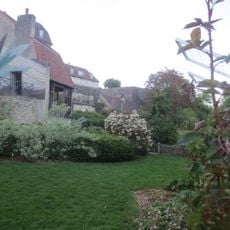
The observatory's park was landscaped from 1904 under director Auguste Leboeuf. A cadran analemmatique (analemmatic sundial) calculated by Louis Jules Gruey in 1902 is known as the third oldest of its kind in the world. The site is labelled Patrimoine du XXe siècle.
The observatory stands on avenue de l'Observatoire in the Montrapon-Fontaine-Écu district, on the site of La Bouloie chosen in the 1880s for its distance from city light. The grounds include a park landscaped from 1904 under director Auguste Leboeuf. The tower's two front windows and louvered vent sit above a squat annex on the right.
The facility conducted rigorous timepiece tests from 1884 through the 1970s, placing watch movements in different positions and temperature conditions for extended periods. This demanding testing process was crucial for the Swiss watchmaking industry in establishing its worldwide reputation for precision.
The community of curious travelers
AroundUs brings together thousands of curated places, local tips, and hidden gems, enriched daily by 93,528 contributors worldwide.