Château de Montségur, Medieval fortress in Montségur, France
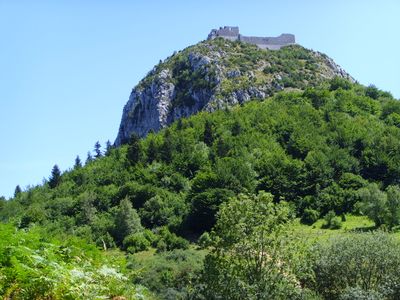
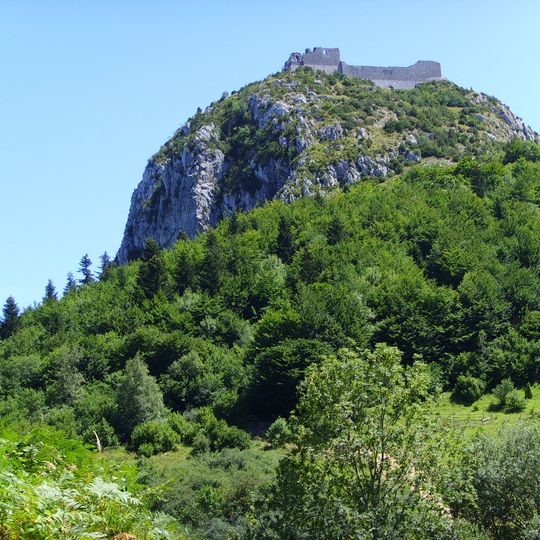
Château de Montségur is a ruined fortress on the limestone pog of Montségur at 1,207 m, above the village in the Ariège. Its walls of grey stone form an irregular polygon about 80 m by 25 m, with a rectangular keep (20 m by 9 m) at the northwest and an eastern shield wall. A modern footbridge leads to the inner courtyard through a south door protected by a murder hole.
The fortress developed in the 13th century as a refuge for Cathars and became the center of their resistance until 1244. Its fall marked a turning point in the history of this religious group in the region.
The name comes from Latin mons securus, "safe hill", which became mont ségur in Occitan. From 1232 the fortress housed the Cathar church's hierarchy, and the lead tokens (méreaux) found here let members recognise each other at secret meetings. Excavations uncovered remains of oxen, sheep, deer, boar, geese and chickens, showing the community ate meat.
The climb is steep and takes about 30 minutes on a marked trail through forested terrain, becoming more demanding in warmer months. Sturdy footwear and sufficient water are important, and arriving early helps you avoid crowds and explore the ruins at a comfortable pace.
The stone walls align with the movements of the sun at specific times of year, revealing that medieval builders used astronomical knowledge in their design. This alignment helps researchers today study ancient building techniques and the knowledge people possessed back then.
The community of curious travelers
AroundUs brings together thousands of curated places, local tips, and hidden gems, enriched daily by 94,023 contributors worldwide.