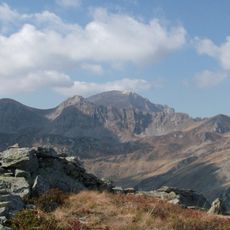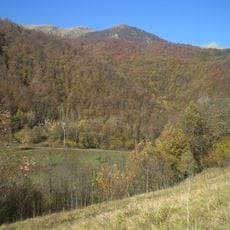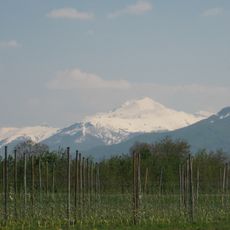
Ligurische Grenzkammstraße, Historic mountain road network in Maritime Alps, Italy and France.
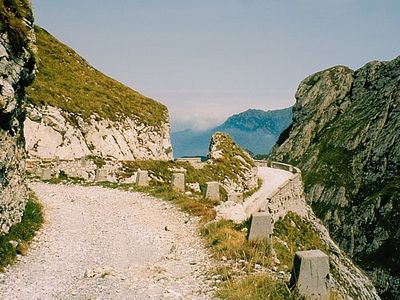
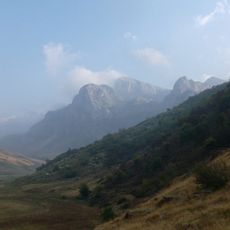
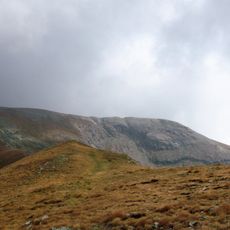
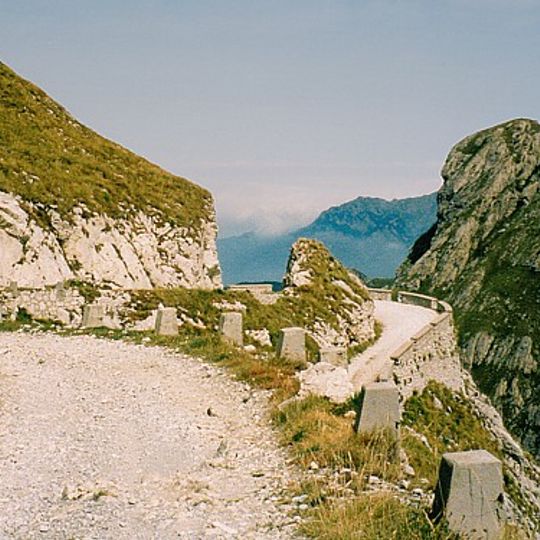
The Ligurische Grenzkammstraße is a 63-kilometer unpaved military road from Colla Melosa to the Colle di Tenda junction, much of it above 2000 meters. Its surface of pale gravel and dirt is scattered with loose stones; low rectangular concrete blocks line the right edge as a barrier, while a grassy, rocky slope rises on the left. The road crosses the French-Italian border several times.
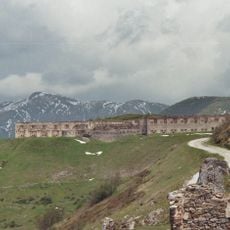
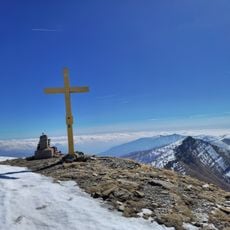
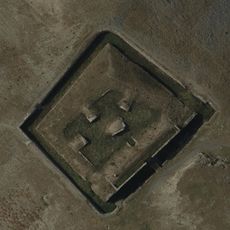
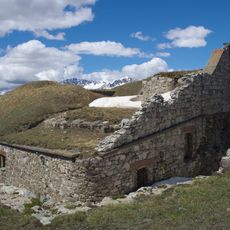
The route's core was laid out as a military road between the world wars, in the Mussolini era, and kept in repair then. Forts such as the Forte Centrale at the Colle di Tenda (1880) line the ridge, most high forts built between 1880 and 1940. The road crosses the French-Italian border several times because the border line before 1947 partly ran differently.
The name Via Marenca means "road to the sea", and mule trains carried salt, anchovies, olives and cheese along it; salt smuggling against the gabelle, abolished in 1790, fed the branching of these paths. The route also served pilgrims heading to the Sanctuary of Notre-Dame de La Salette, and salt-preserved anchovies remain the base of Piedmont's bagna càuda.
The 63 km route runs from Colla Melosa to the Colle di Tenda junction, with the roughly 30 km core section tolled for motor vehicles. Motor traffic is barred on Tuesdays and Thursdays; cyclists and walkers pay nothing and may use it all week. It opens after the snowmelt, in summer and autumn.
The road crosses the French-Italian border several times, an oddity for a military road explained by the fact that the border line in this region ran partly differently before 1947. The Denzel Alpine road guide rates the drive as difficult to very difficult (SG 3-4, SG 4-5).
The community of curious travelers
AroundUs brings together thousands of curated places, local tips, and hidden gems, enriched daily by 93,802 contributors worldwide.