Gouffre Lépineux, Pit cave system in Pyrénées-Atlantiques, France
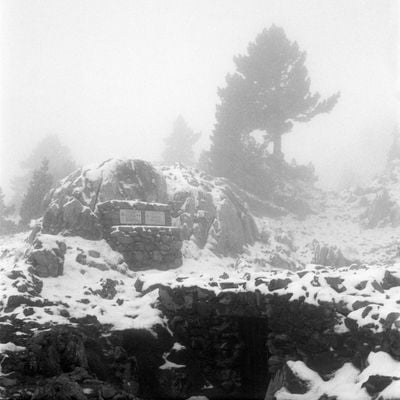
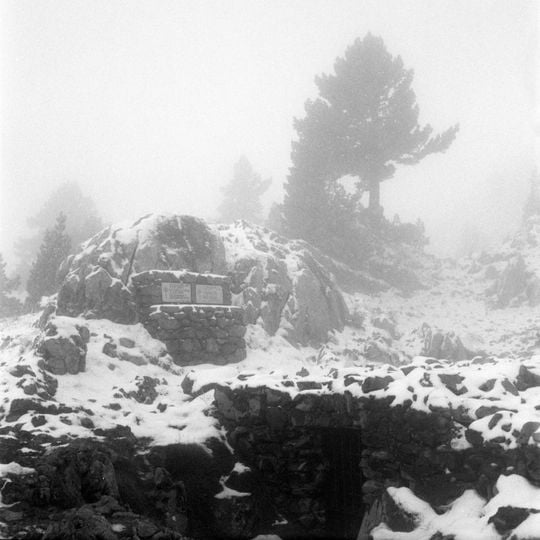
Gouffre Lépineux, also called gouffre de La Pierre Saint-Martin, is the historic entrance of a cave network in the La Pierre Saint-Martin massif, near the Franco-Spanish border above Arette. The entrance is a dark, wider-than-tall opening in the ground, ringed by stacked stone blocks and set below a rounded rock outcrop carrying two plaques. Inside, the shaft drops 320 metres to the immense Lépineux hall.
The entrance shaft was discovered in 1950 by Georges Lépineux, which sparked dedicated exploration efforts. These works revealed a deep underground network with a vertical descent of over 300 meters.
The entrance is named after Georges Lépineux, who spotted a chough flying out of a hole with air blowing from it in 1950. Since 1966 the ARSIP association has coordinated research on the massif, and the network's halls carry names such as salle Lépineux, Gibraltar, salle Elizabeth Casteret and salle de la Verna.
The Lépineux shaft is reached on foot from the La Pierre Saint-Martin pass area, on the French side near Arette; the entrance lies close to the Spanish border. The 320-metre drop is a vertical caving descent, not a walk-in visit. The separate Verna chamber is reached through a 600-metre tunnel pierced by EDF in 1956.
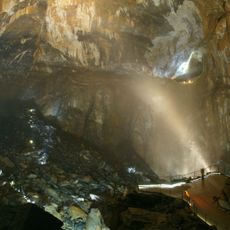
The Salle de la Verna, 245 metres across and 194 metres high, could hold Notre-Dame de Paris ten times over; a hot-air balloon flight was even staged inside it in 2003. In 1956 EDF drove a tunnel to reach the chamber for a water-capture scheme, abandoned then revived in 2006 by SHEM, leaving a 600-metre gallery to the hall.
The community of curious travelers
AroundUs brings together thousands of curated places, local tips, and hidden gems, enriched daily by 93,793 contributors worldwide.