Cimetière Sainte-Marie, Historic cemetery in Le Havre, France
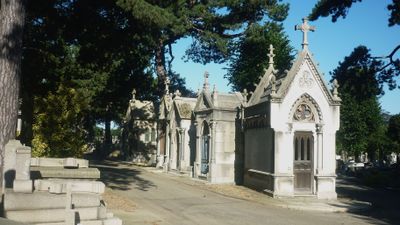
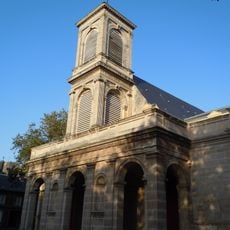
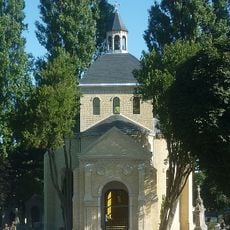
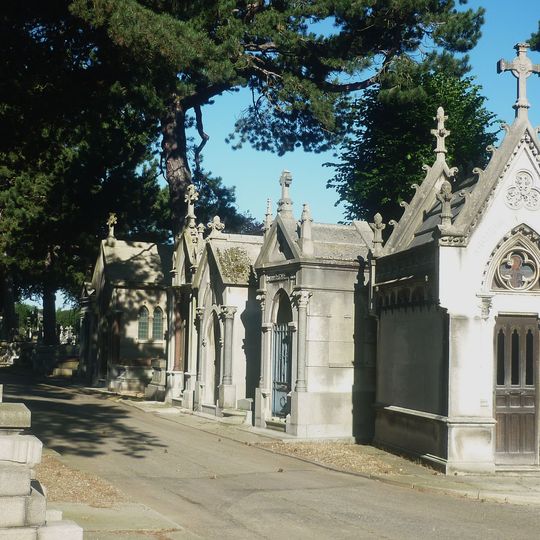
Cimetière Sainte-Marie covers about 28 hectares on the upper town along rue du 329e R.I., with its main entrance at 2 rue Eugène Landoas. The oldest part lies to the east; the grounds were enlarged several times between 1875 and 1915. It holds many sculpted statues and mausoleums, including the Dubosc family chapel, one of the largest in the cemetery, and a Greek-cross chapel built by Émile Platel in 1861 with a brick lantern turret.
This cemetery was established in 1851 to replace an earlier burial ground and later grew through purchases of surrounding farmland. The expansion between 1875 and 1915 reflects how the city developed during that period.
The military squares hold French, Belgian, British and German graves from the First World War, plus a British square from the Second. Under French military steles lie civilians killed in the Allied bombing of Le Havre. Monuments include one to the shipwreck victims of the liner La Bourgogne and one to rescuers.
The main entrance is at 2 rue Eugène Landoas, along the rue du 329e R.I. in the upper town. The oldest part lies to the east; the grounds were enlarged several times between 1875 and 1915. The cemetery covers about 28 hectares, so allow time to walk between the divisions.
The cemetery holds the grave of Jules Durand, a dockers' union activist condemned to death in 1910 for his role in a strike, the only French citizen sentenced to death for trade unionism under the Republic. Painter Émile Renouf and aviation pioneer Hubert Latham, killed by a buffalo in 1912, are also buried here.
The community of curious travelers
AroundUs brings together thousands of curated places, local tips, and hidden gems, enriched daily by 92,784 contributors worldwide.