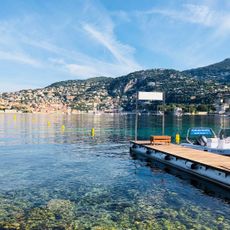
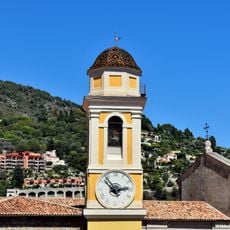
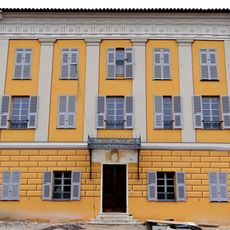
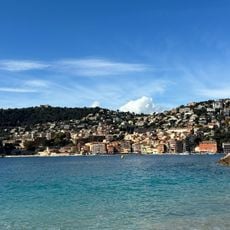
Citadelle de Villefranche-sur-Mer, 16th-century citadel in Villefranche-sur-Mer, France.
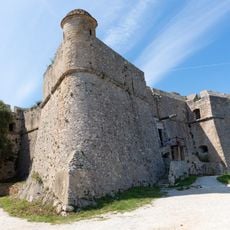
The Citadelle de Villefranche-sur-Mer, also called citadelle Saint-Elme, is a 16th-century bastioned fortress on a rocky, steep 3-hectare site with an irregular trapezoidal plan. Its ramparts are filled with earth, and four bastions—two facing the sea—have casemates for cannon flanking and echaugettes at their tops. The gateway bears a plaque reading "LA CITADELLE" beneath a pediment.
Construction began around 1550 on the seaward side, and the date 1554 is carved on the landing-stage arch. The project was studied by the Milanese engineer Gian Maria Olgiati for Duke Charles II of Savoy and continued by Emmanuel-Philibert, who financed it partly with booty from the 1557 victory of Saint-Quentin. The citadel guarded the Darse, the military port of the Savoy States, against Turkish-Berber raids.
The citadel houses three museums, including the Volti Foundation Museum with 180 bronze sculptures and a collection of works by contemporary masters like Joan Miró.
The citadel stands on a rocky spur above the Darse harbour, reached on foot along sloping paths; sturdy shoes help on the irregular ground. The 1554 date is carved on the landing-stage arch, and the gate plaque reads "LA CITADELLE". Access times change with the season, so check before setting out.
The fort's name likely comes from an older chapel that stood on the rocky outcrop before construction. The site covers about 3 hectares on steep, uneven ground, giving the fortress an irregular trapezoidal plan. Its four bastions, two facing the sea, have cannon casemates and turrets at their tops.
The community of curious travelers
AroundUs brings together thousands of curated places, local tips, and hidden gems, enriched daily by 94,489 contributors worldwide.