Palace and Park of Versailles, Royal estate and gardens in Versailles, France
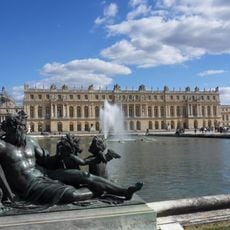
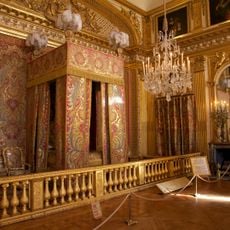
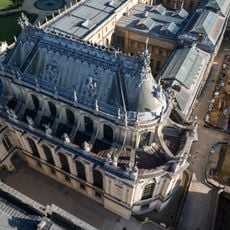
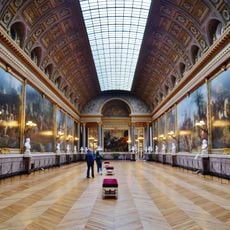
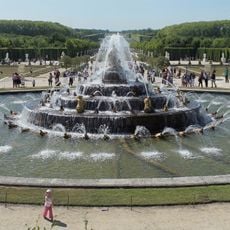
The Palace and Park of Versailles is a vast complex featuring a main building with hundreds of rooms and corridors. The surrounding grounds include extensive gardens laid out in a formal French style with geometric lawns, canals, fountains, and sculptures arranged throughout.
Louis XIII bought 200 hectares from Jean-François de Gondi in 1632 and kept Versailles as a private domain. Louis XIV made it his main residence from 1682 and enclosed the great park in 1683, a hunting reserve of about 8,000 hectares. After the court left in 1715, an edict of May 1716 reunited the domain with the Crown; Louis XV returned in 1722.
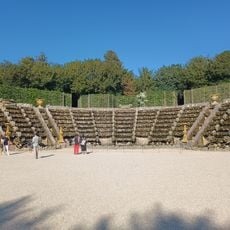
The gardens were laid out from 1662 by André Le Nôtre, who had designed Vaux-le-Vicomte; the Petit Parc was finished in 1665 and 24 marble statues were installed in 1674. The main avenue runs from the palace to the Apollo Fountain, whose statue of the sun god by Jean-Baptiste Tuby likens Louis XIV to Apollo. In the bosquets, clearings framed by trees, theatrical performances and concerts were held.
The gardens lie between the palace, the Orangerie and the Neptune Fountain, with the Royal Avenue running from the two water basins past the Latona Fountain to the Apollo Fountain. The Grand Canal, 1,650 m long and 23 ha in area, forms a cross whose right arm leads toward the two Trianons. The estate covers 815 ha, so plan for long walks between the palace, the Trianons and the Hameau de la Reine.
The water displays were engineered with an ingenious system of pipes and pumps that moves water without modern machinery. This system operates using the same principles from over 300 years ago, though it now receives upkeep through contemporary techniques.
The community of curious travelers
AroundUs brings together thousands of curated places, local tips, and hidden gems, enriched daily by 92,644 contributors worldwide.