Latona Fountain, Marble fountain in Gardens of Versailles, France
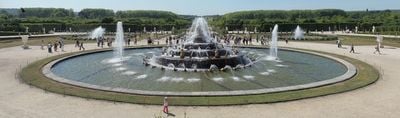
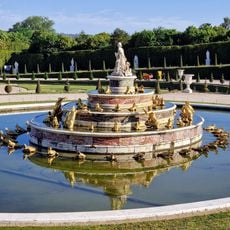
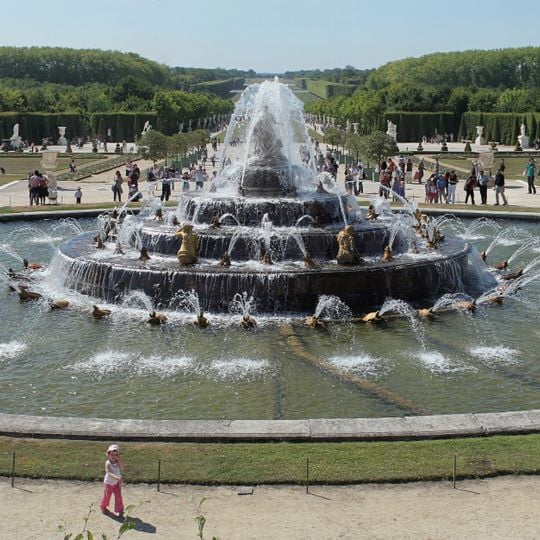
The Latona Fountain stands in the Latona Basin between the Palace of Versailles and the Grand Canal. Jules Hardouin-Mansart's design forms a pyramid of four oval tiers clad in 230 marble pieces: white and grey-veined Carrara, greenish marble from Campan and red marble from Languedoc. Gaspard Marsy's statue of Latona with Apollo and Diana tops it, looking west over the gardens, while Balthazard Marsy's six lead half-human, half-frog figures ring the basin.
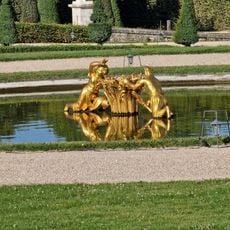
The fountain was begun in 1670 by André Le Nôtre, with the Marsy brothers supplying the statuary: Balthazard made six lead half-human, half-frog figures for the basin rim, and Gaspard carved the central group of Latona with Diana and Apollo between 1668 and 1670. In 1686 Jules Hardouin-Mansart enlarged it into four oval tiers topped by Gaspard's statue, now facing west over the Grand Canal, with gilded frogs and lizards by Claude Bertin.
The fountain shows the mythological story of goddess Latona protecting Apollo and Diana while transforming Lycian peasants into frogs. The water features and sculptures tell this ancient tale in a way visitors can observe and interpret as they walk around.
The fountain sits within the main gardens and is easy to reach from the palace. Water displays operate on specific days during warmer months, so checking in advance about which days have active jets will help you plan your visit.
An underground network of lead pipes beneath the fountain delivers water to around 230 different points, revealing the engineering sophistication of the period. This hidden system allows precise water sprays from frogs and other figures while remaining completely invisible.
The community of curious travelers
AroundUs brings together thousands of curated places, local tips, and hidden gems, enriched daily by 92,847 contributors worldwide.