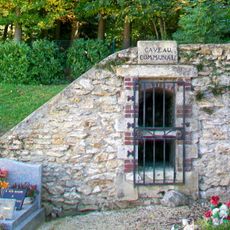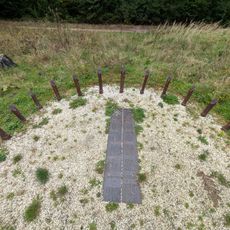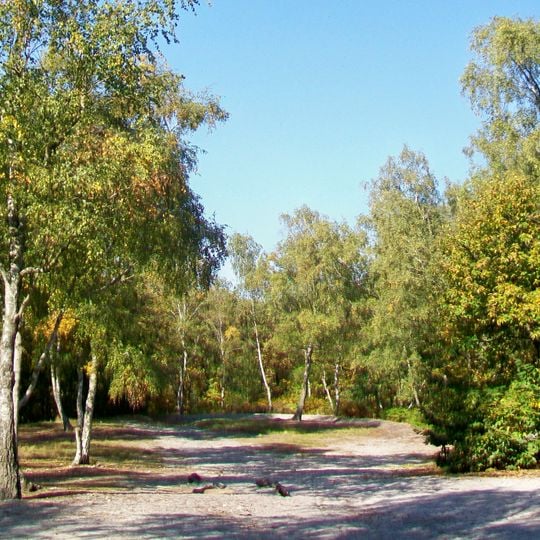
Forêt de Montmorency, Forest in Île-de-France, France
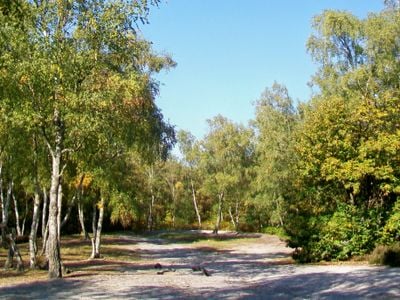
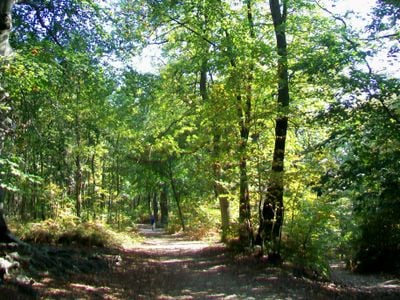
Montmorency Forest is a 2,200-hectare wooded massif in Val-d'Oise, 15 km north of Paris, of which 1,972 hectares are state forest. It covers a 12 km by 4 km outlier hill with three summits rising to 192 m near the sandy Pins Brûlés knoll. About 90% of the stands are chestnut coppice, with oak, beech, birch and Scots pine; streams leaving the massif feed the ru d'Enghien.
Most Île-de-France forests were oak woods at the end of the Middle Ages, but Montmorency was planted with chestnuts, whose near-imputrescible wood served as stakes (échalas) for the surrounding vineyards, and also for firewood and barrel hoops. The forest stayed entirely private and divided into parcels until 1933, and became almost entirely state forest in 1980.
The forest's name comes from the Montmorency family, whose lands it covered; it stayed in private hands, split among many owners, until 1933. The chestnut coppices were planted to supply nearly rot-proof stakes for the surrounding vineyards, and the wood also went to firewood and barrel hoops. The writer Jean-Jacques Rousseau, living in Montmorency from 1756 to 1762, called the forest almost at his door his "cabinet de travail".
The paths are mainly accessible from the edges and offer varying lengths and difficulty levels for different visitors. You should prepare for changing weather and uneven ground, especially in the rolling sections.
The forest sits above Europe's largest gypsum deposit, mined by companies including Lafarge and Placoplatre. Mining beneath the woodland is invisible to visitors but defines the geological reality of this place.
The community of curious travelers
AroundUs brings together thousands of curated places, local tips, and hidden gems, enriched daily by 94,078 contributors worldwide.