Hôtel d'Escoville, Renaissance mansion in central Caen, France.
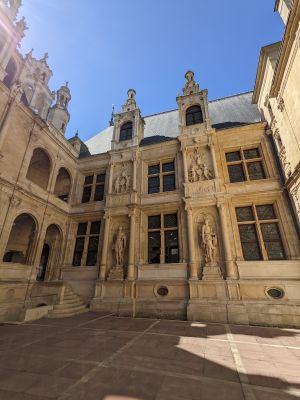
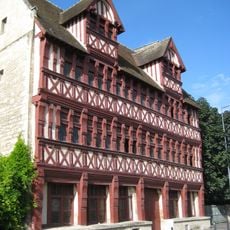
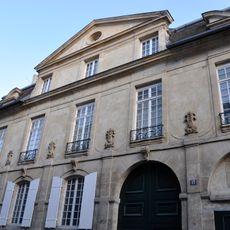
The Hôtel d'Escoville is a Renaissance-period mansion in central Caen featuring richly carved stone facades and balanced proportions across multiple stories. The building displays the architectural hallmarks of that era with articulated facades and rows of decorated windows.
The mansion was built between 1533 and 1540 for a wealthy merchant and was part of a wave of construction projects that shaped the city. The period of its creation was marked by new artistic influences from the south that are reflected in its design.
The mansion's name comes from Nicolas le Valois d'Escoville, who had it built in the 1530s; it was also called hôtel de Matignon and hôtel du Grand Cheval. From 1652 the Académie des Arts et des Belles-Lettres de Caen met in its finest room until 1685, after learned men began gathering on rainy Mondays at place Saint-Pierre to await the Paris post.
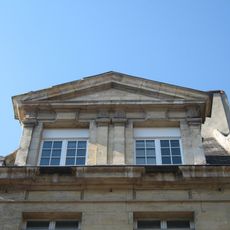
The building stands on the place Saint-Pierre, its entrance marked by a blue "Office de Tourisme & des Congrès" sign; the tourist office occupies the ground floor. The courtyard behind the street facade survived the 1944 bombing, while the facade itself was rebuilt around 1960 to Charles Dorian's classical design. Look up at the three dormer windows and the carved relief panels above the outer windows.
The mansion's name changed with its owners: it was also called hôtel de Valois, hôtel de Matignon and hôtel du Grand Cheval. In 1541 Nicolas le Valois d'Escoville died of apoplexy during a reception held in the house, completed only a year earlier.
The community of curious travelers
AroundUs brings together thousands of curated places, local tips, and hidden gems, enriched daily by 93,234 contributors worldwide.