Musée de minéralogie, Mineralogy museum at the School and Observatory of Earth Sciences, Strasbourg, France
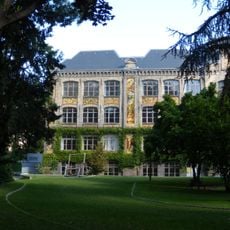
The Musée de minéralogie occupies two rooms in the École et observatoire des sciences de la Terre building of the University of Strasbourg, behind a grey stone facade with a round-arched double door under a triangular pediment. Its 30,000 mineral samples, mostly from 19th-century deposits now exhausted, form France's largest university mineral collection. A cast of the largest single gold nugget ever found, a 68 kg lump from Australia, is on display.
The museum was founded in 1890 at the Institute of Earth Sciences, growing from a Natural History Cabinet assembled by a local physician. This transformation from private medical collection to public scientific institution shaped the museum's character and mission.
The mineral collection began with the 18th-century natural history cabinet of Strasbourg physician Johann Hermann; after his death in 1800 the city turned it into a museum, dissolved in 1880 in favour of the new university's scientific collections. Many specimens date from the 19th century and come from deposits now exhausted, making this the largest university mineral collection in France.
Access is available on Wednesday afternoons, though it is worth checking beforehand if additional visits can be arranged during school holidays. The museum is located on the institute's grounds and is accessible on foot from Strasbourg's city center.
Among the 30,000 minerals is a cast of the largest single gold nugget ever found, a 68 kg lump from Australia. A "box with fluorescent stones" shows minerals glowing under ultraviolet light, and 44 plaster models made after meteorite originals form the only such set in France.
The community of curious travelers
AroundUs brings together thousands of curated places, local tips, and hidden gems, enriched daily by 92,894 contributors worldwide.