Vis de Saint-Gilles-du-Gard, Helical staircase in Saint-Gilles, France
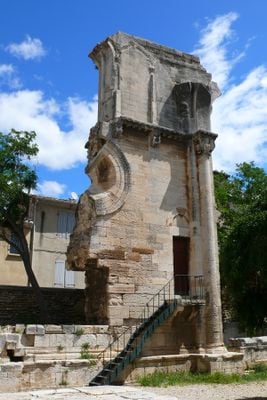
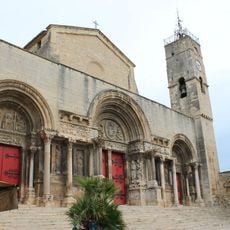
The Vis de Saint-Gilles-du-Gard is a 12th-century helical staircase cut into the thickness of a wall in the north transept of the former Abbey of Saint-Gilles. Its steps rest on a sloping barrel vault built on a nine-voussoir module, rising around a central drum-shaped core. The vault springs from cylindrical outer walls, and the radiating steps are laid over rubble on the vault's extrados.
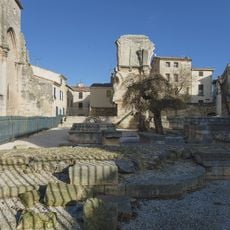
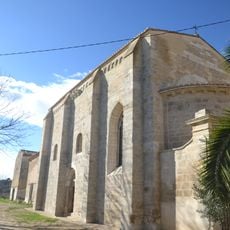
Built in the 12th century within the north transept wall of Saint-Gilles Abbey, the stair survived the Protestant destruction of the abbey between 1562 and 1622, when the nave vaults and bell tower were lost. It was listed as a monument historique in 1949 and classified in 1984.
The staircase was a required stop on the tour of journeyman stonemasons, who left graffiti on its walls; the oldest date from 1643. Philibert Delorme cited it as the perfect example of the "traict géométrique" at the origin of classical stereotomy.
The stair is cut into the thickness of the north transept wall of the former abbey church, so it is reached from inside the building rather than from the street. Its steps rest on a sloping barrel vault that turns on a central drum core, and the lowest flight sits on a masonry block. Look for the masons' graffiti, the oldest dated 1643, on the stones along the climb.
The staircase is a "rampant barrel vault" built on a module of nine voussoirs, rising as it turns on itself; the steps rest on the vault's outer surface and take no part in its structure. The central core is a vertical drum with a helical shoulder supporting the first voussoirs. Philibert Delorme cited it as the perfect example of the "traict géométrique" behind classical stereotomy.
The community of curious travelers
AroundUs brings together thousands of curated places, local tips, and hidden gems, enriched daily by 94,583 contributors worldwide.