Monte Oronaye, Mountain summit in Cuneo Alps, Italy
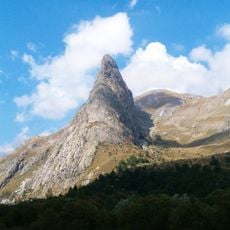
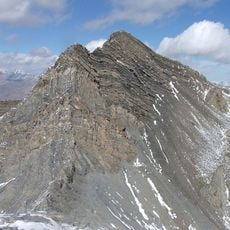
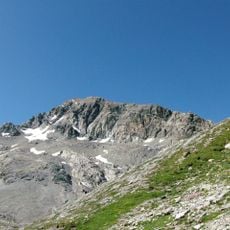
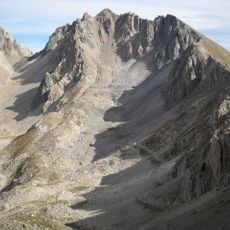
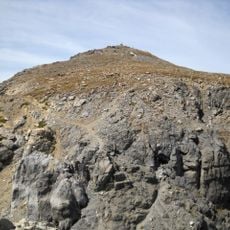
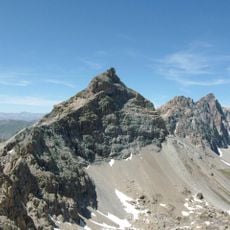
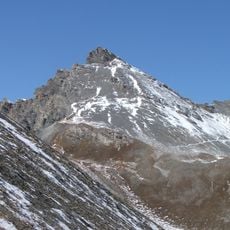
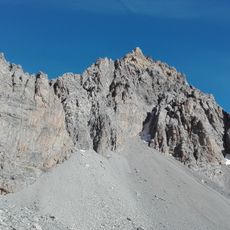
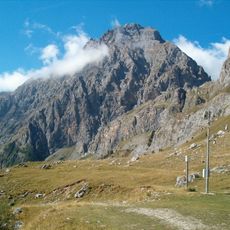
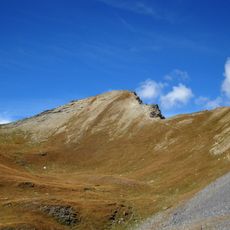
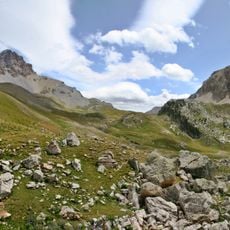
Tête de Moïse (Monte Oronaye in Italian) is a 3,100-metre limestone summit on the Italy-France border, the first massif of the Cottian Alps when coming from the Col de la Maddalena. It forms a massive rocky outcrop on the main Alpine watershed between the Maira and Ubayette valleys, with steep flanks in all directions. The rock is Middle Triassic dolomitic limestone over fractured marble and black flysch, and is notably crumbly, so climbers should wear a helmet.
The Via Ferrata degli Alpini was built in the 1930s by the Alpini of the Dronero Battalion for military observation. It was restored between 2010 and 2012. The route keeps two parallel cables: the 1930s one with wooden ogives set into it for handholds, and a safety cable for belaying. Its final stretch, a long iron ladder, reaches Cima Dronero at 3,050 m, not the main summit.
The mountain carries two names: Monte Oronaye in Italian and Tête de Moïse in French, used on either side of the border. The Via Ferrata degli Alpini, built in the 1930s by the Dronero Battalion for military observation, keeps its original twin cables with wooden ogives for grip alongside a modern safety cable, and ends at Cima Dronero (3,050 m).
The best climbing season runs from late spring through early autumn when weather conditions are most stable. Climbers should prepare for changing conditions and bring proper footwear, protective gear, and supplies appropriate for alpine terrain.
The Via Ferrata degli Alpini, built in the 1930s by the Dronero Battalion for military observation, was restored between 2010 and 2012. It keeps two parallel cables: the 1930s one with wooden ogives for grip and a modern safety cable. The route ends at Cima Dronero (3,050 m) with a long iron ladder, not on the Oronaye summit itself.
The community of curious travelers
AroundUs brings together thousands of curated places, local tips, and hidden gems, enriched daily by 92,894 contributors worldwide.