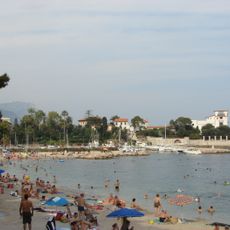
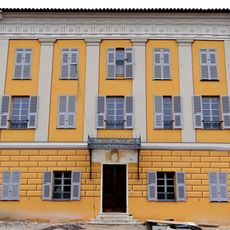
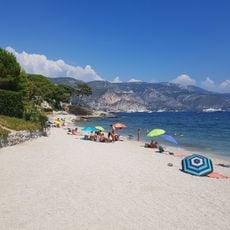
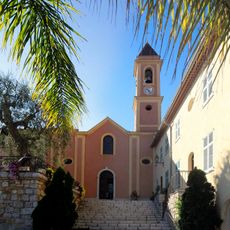
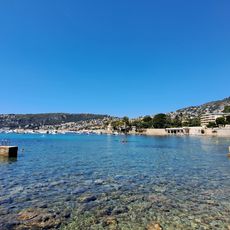
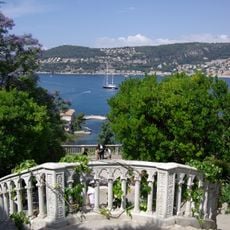
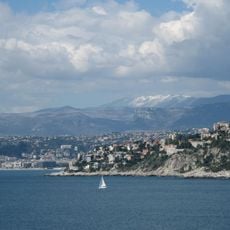
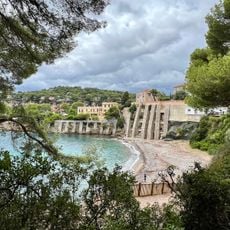
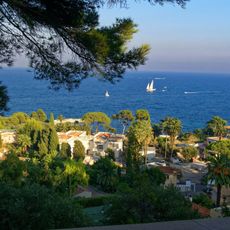
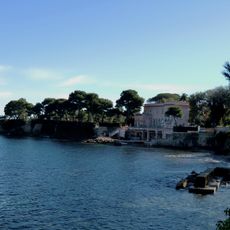
Chapelle Saint-Hospice, Baroque chapel in Saint-Jean-Cap-Ferrat, France.
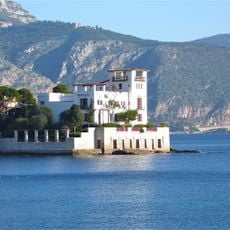
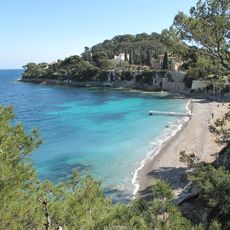
Chapelle Saint-Hospice is a Baroque chapel in Saint-Jean-Cap-Ferrat with white stone walls that stand against the Mediterranean coastline, accompanied by a bronze Virgin and Child statue measuring 11.4 meters. The building occupies a narrow headland with views facing the sea.
A church dedicated to Saint Hospice is first documented in 1075, said to stand where the hermit's ruined tower had been. In 1615 the chapel lay inside a fort built by Charles Emmanuel I of Savoy; in 1655 Charles Emmanuel II had it rebuilt in its present form. The fort was demolished in 1706 by order of Louis XIV, and the chapel, damaged during the Revolution, was restored and reopened for worship in 1801.
The interior holds thirty paintings by Louis Marchand des Raux that show miracles linked to Saint Hospice, a monk from the sixth century. These works reveal how locals viewed this religious figure and his healing powers.
The chapel stands on the Pointe Saint-Hospice, reached on foot along the coastal path from Saint-Jean-Cap-Ferrat. The entrance is on the north side, through the portico built in 1826 by King Charles-Félix. The bronze Virgin and Child, moved here in 1937, stands nearby on the headland.
The 11-metre bronze Virgin and Child beside the chapel was commissioned by the Nice olive-oil merchant Auguste Gal from the Milanese sculptor Galbusieri in 1903 to mark a vow. Barred from placing it atop his property's tower by the military authorities, he saw it moved to its present spot in 1937 by the chocolatier Jacques Menier, who had bought the estate.
The community of curious travelers
AroundUs brings together thousands of curated places, local tips, and hidden gems, enriched daily by 94,120 contributors worldwide.