Villa Kerylos

Log in to your account

AroundUs is a community-driven map of interesting places, built by curious explorers like you. It grows with every review, story, and photo you share.
Connect to save your favorite spots, contribute locations, and create personalized routes.
By continuing, you accept our Terms and Conditions and our Privacy Policy
Add to collection
Map
Suggest a change
Share

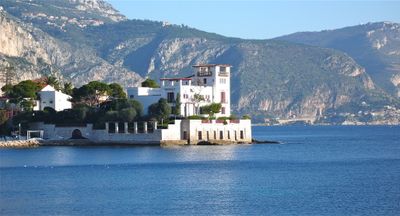
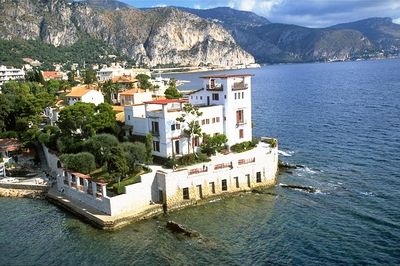
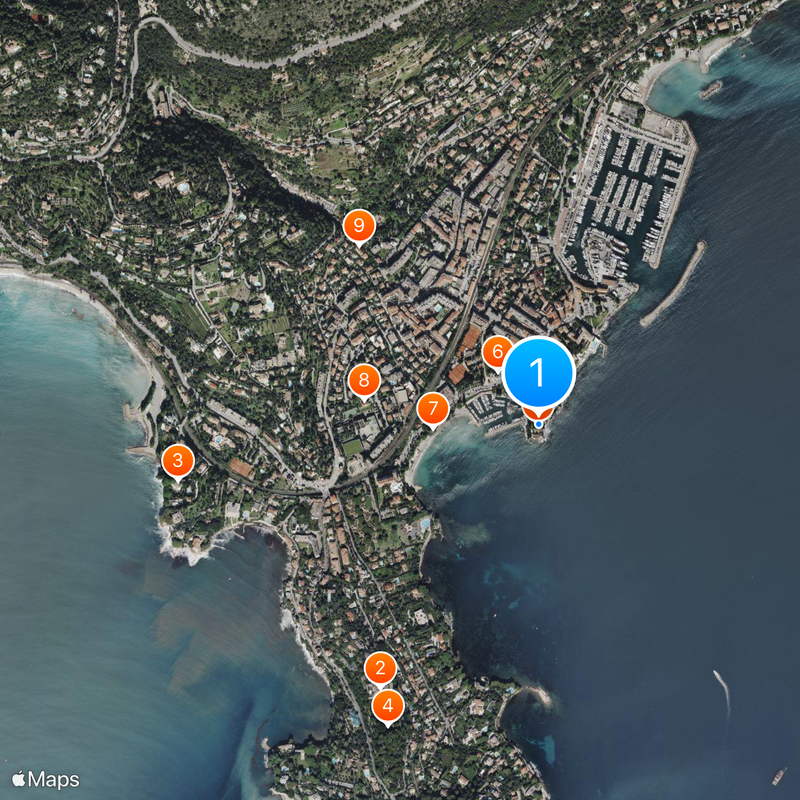
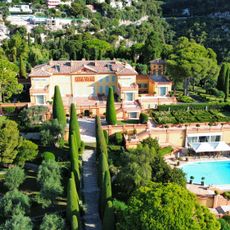
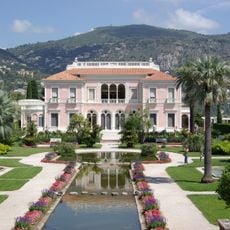
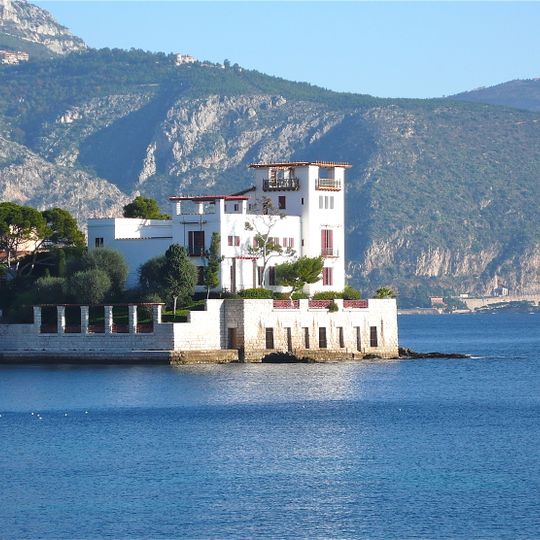
Villa Kerylos, Greek Revival villa in Beaulieu-sur-Mer, France.

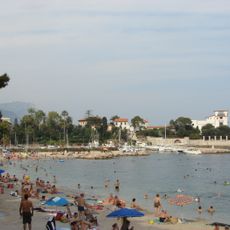
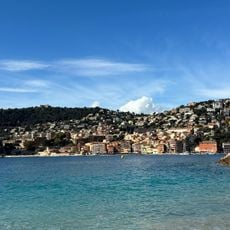
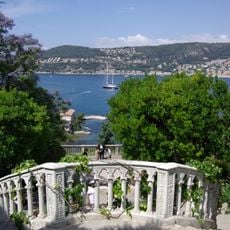
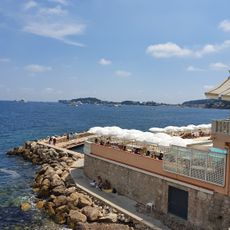
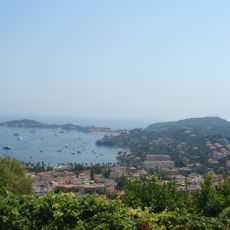
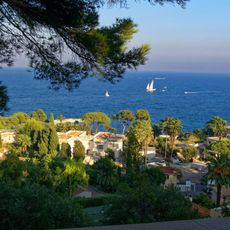
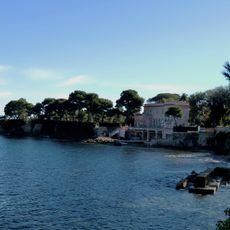
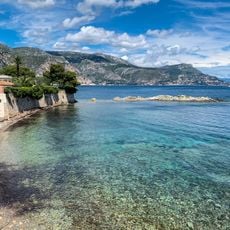
The Villa Kerylos stands on a peninsula surrounded by the Mediterranean Sea, featuring marble columns, peristyle courtyards, and detailed mosaics throughout its structure.

Theodore Reinach commissioned architect Emmanuel Pontremoli to construct this residence between 1902 and 1908, drawing inspiration from noble houses of ancient Delos.

The interior spaces contain precise reproductions of Greek furniture, stucco reliefs, and decorative elements that reflect the sophisticated lifestyle of 2nd century BC Greece.

Visitors can access the villa through guided tours at 11:00 and 15:00 daily, with discounted entry fees available for individuals under 26 years old.

The villa incorporates early 20th-century amenities such as underfloor heating while maintaining strict adherence to ancient Greek architectural principles.

Location: Beaulieu-sur-Mer

Inception: 1908

Architects: Emmanuel Pontremoli

Architectural style: Greek Revival architecture

Accessibility: Wheelchair limited access

Fee: Yes

Operator: Centre des monuments nationaux

Address: Impasse Gustave Eiffel 06310 Beaulieu-sur-Mer

Phone: +33493010144

Website: http://villakerylos.fr

GPS coordinates: 43.70319,7.33389

Latest update: July 31, 2025 19:40

French Riviera: hilltop villages, historic forts, museums

The French Riviera offers numerous sites beyond the main tourist routes. Medieval hilltop villages such as Èze and Saint-Paul de Vence perch above the coast, while historic fortifications like Fort Carré in Antibes preserve the region's maritime past. Villa Ephrussi de Rothschild on Saint-Jean-Cap-Ferrat and Château Grimaldi in Cagnes-sur-Mer display architectural styles from different eras. The region extends from the coastline to the backcountry. The Îles de Lérins off Cannes are accessible by ferry, Col de la Bonette reaches 9,193 feet (2,802 meters) elevation, and Vallée des Merveilles in the Mercantour preserves prehistoric rock carvings. Hiking trails cross Parc national du Mercantour and follow the coast at Cap d'Ail. The Gorges du Verdon to the north form one of Europe's deepest canyons. Museums in Nice focus on Marc Chagall, Henri Matisse and Asian art. The Musée de la Mer on Île Sainte-Marguerite documents the island fortress's history. Smaller towns like Tourrettes-sur-Loup and Le Cannet lie a few miles from the coastal cities. Lac de Saint-Cassien near Montauroux provides water sports in a rural setting.

Historic villas and estates in Antibes

Between the ramparts of the old town and the pines of Cap d'Antibes, this seaside resort on the French Riviera preserves an architectural heritage spanning eight centuries. Grimaldi Castle, a 12th-century fortress turned Picasso’s first museum in 1946, overlooks the seafront from Place du Safranier. Further south, Fort Carré stands with its four bastions on a 26-meter-high (85 ft) rocky promontory, built in 1565 to defend the border between France and the Duchy of Savoy. Cap d'Antibes features about twenty residences built from the late 19th century through the interwar period. Villa Eilenroc (1867) covers 27 acres with French-style gardens and a rose garden facing the sea. Château de la Croë (1927) once hosted the Duke of Windsor and is now a private estate. Notable visitors included Anatole France, who resided in Villa Soleil, and Karl Lagerfeld in the 1990s. Villa Thuret, established in 1857 by botanist Gustave Thuret, currently hosts a research garden of the INRAE with 2,500 plant species suited to Mediterranean conditions. Modernist architecture is represented by Villa Aujourd'hui (1938), a rare example of geometric design from the 1930s on the Côte d'Azur.

Neo Moorish architecture across the world

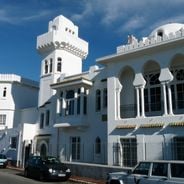
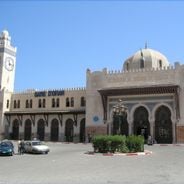
The neo-Moorish architecture developed in the 19th and early 20th centuries, driven by European interest in oriental forms. This architectural movement combines Western building elements with Moorish decorative motifs: horseshoe arches, carved arabesques, geometric mosaics, and ornate stuccoes. This stylistic synthesis appears in a variety of structures, from places of worship to private residences, theaters, and city fortifications. The collection gathers representative examples from across Europe and beyond. In Marseille, the Alcazar Grand Theatre has displayed a façade decorated with oriental patterns since 1857. The Great Synagogue of Brussels, inaugurated in 1878, demonstrates the adoption of this style in Belgian religious architecture. In Germany, Drachenburg Castle near Bonn incorporates Moorish elements into a late 19th-century villa. The movement also reaches unexpected locations: Brighton’s Royal Pavilion blends Indian and Islamic influences for a British royal seaside residence, while rural farms in Hälsingland, Sweden, include ornaments inspired by this orientalist trend. From Pena Palace overlooking Sintra to the Justo Sierra Synagogue in Mexico city, these buildings exemplify the international spread of an architectural style that profoundly marked its period.

Nice to photograph: best viewpoints, Promenade des Anglais, and Castle Hill

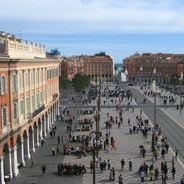
Nice naturally lends itself to photography. The Mediterranean light shapes the city from morning to evening, revealing in turn the ochre facades of Old Nice, the palms lining the Promenade des Anglais, or the blue domes of Saint-Nicolas Orthodox Cathedral. From the Château hilltop, at 92 meters high, the view encompasses the entire bay, while below, Place Masséna displays its geometric paving stones and red facades. The flower market at Cours Saleya, established since the 17th century, extends to Lympia Port where yellow facades reflect in the water, each neighborhood forming a different scene. The Negresco Hotel with its pink dome marks the coastline, and the Matisse Museum shares the painter's love for the light of the South. Nice offers a variety of viewpoints, making it a preferred destination for those interested in capturing the architecture, colors, and vitality of a city oriented toward the Mediterranean.

Reviews

Visited this place? Tap the stars to rate it and share your experience / photos with the community! Try now! You can cancel it anytime.

« Villa Kerylos - Greek Revival villa in Beaulieu-sur-Mer, France » is provided by Around Us (aroundus.com). Images and texts are derived from Wikimedia project under a Creative Commons license. You are allowed to copy, distribute, and modify copies of this page, under the conditions set by the license, as long as this note is clearly visible.

Discover hidden gems everywhere you go!

From secret cafés to breathtaking viewpoints, skip the crowded tourist spots and find places that match your style. Our app makes it easy with voice search, smart filtering, route optimization, and insider tips from travelers worldwide. Download now for the complete mobile experience.
Around Us App Screenshot

A unique approach to discovering new places

Le Figaro

All the places worth exploring

France Info

A tailor-made excursion in just a few clicks

20 Minutes