Hospices de Dijon, Medieval hospital complex in Dijon, France.
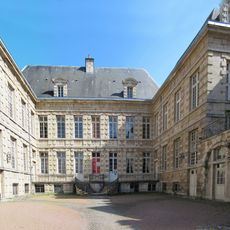
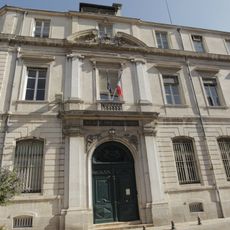
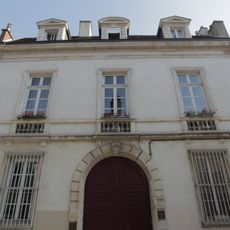
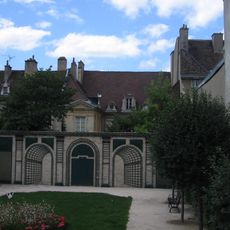
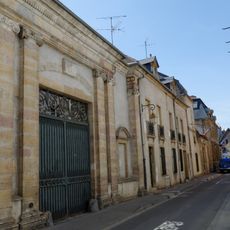
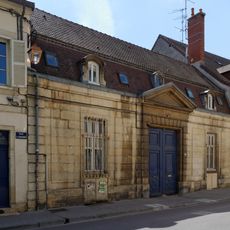
The Hospices de Dijon is a former hospital complex whose long grey-beige stone facade rises to a steep roof of glazed Burgundy tiles. A tall arched gateway framed by rusticated pink stone blocks, with a carved stone panel above it, sits at the centre, flanked by round and shuttered windows; three dormers, an oval window and an octagonal lantern cupola with a small spire top the roof. Its Grande Chapelle, a 90 m longitudinal hall built between 1504 and 1533, served as the patients' reception room.
The complex was established in 1204 and functioned as a care institution for the poor and sick for roughly eight centuries. Over time, the buildings were expanded and modified to adapt to changing medical practices and the needs of the city's population.
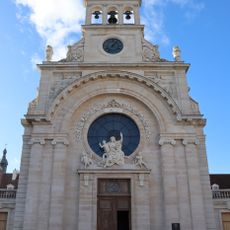
The hospital's name changed with its governors: founded by Duke Eudes III in 1204 under the Hospitallers of the Holy Spirit, it became Notre-Dame de la Charité when Dijon's mayor and aldermen took over in the 16th century, and gained the title hôpital général in 1669 under Louis XIV's measures. The Grande Chapelle, 90 m long and built 1504–1533, served as the patients' reception hall; its classical facade of 1670 by Martin de Noinville carries a statue of Charity with children, topped in 1843 by a campanile with statues of Faith and Hope.
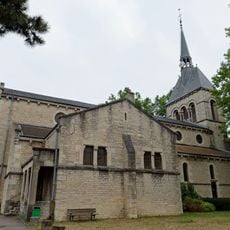
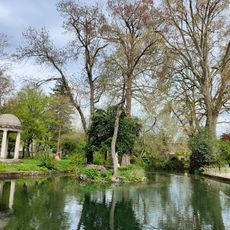
The site lies in the Ouche district south of central Dijon, on land that was once an island in the river. The Sainte-Croix chapel, closed to the public until its 2020-2022 restoration, can now be visited as part of the Cité internationale de la gastronomie et du vin, which opened on the former hospital grounds in 2022.
Over the centuries, the institution accumulated vineyards and estates through donations and bequests, making it a major landowner in the Burgundy region. This wealth helped sustain care for patients and the poor for generations.
The community of curious travelers
AroundUs brings together thousands of curated places, local tips, and hidden gems, enriched daily by 93,127 contributors worldwide.