Centre d'histoire du Mémorial 14-18, World War I interpretation centre in Souchez, France
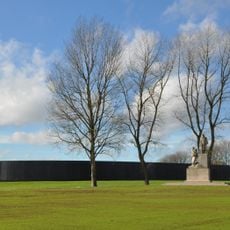
The Centre d'histoire du Mémorial 14-18 is a free World War I interpretation centre in Souchez, designed by architect Pierre-Louis Faloci as a stepped line of matte black concrete cubes he called "chapelles", with no visible openings on the facades. Inside, animated maps, archive photographs, period films and objects trace seven stages of the conflict in Artois and French Flanders, from the war of movement and trench systems to the 1918 offensives and the reconstruction of devastated communes.
The centre opened to the public on 9 June 2015, after its inauguration on 30 May 2015 by Jean-Marc Todeschini, then secretary of state for veterans and remembrance. Its historical programme was drawn up by an international scientific committee chaired by historian Yves Le Maner, with French, British, Belgian and German specialists. It replaced an earlier site known as Lens 14-18.
The centre's memorial space lets visitors consult military records of the 579,606 soldiers who died on the soil of Nord-Pas-de-Calais between 1914 and 1918 on touch tablets. Its historical programme was drawn up by an international scientific committee of French, British, Belgian and German specialists chaired by historian Yves Le Maner.
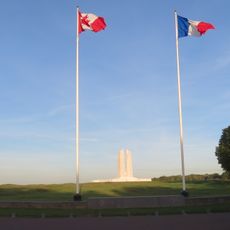
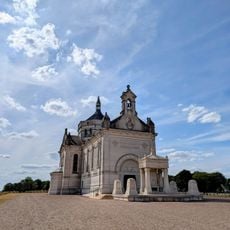
The centre stands in Souchez, within 10 km of major memorial sites such as Notre-Dame-de-Lorette, Vimy and the Ring of Memory at Ablain-Saint-Nazaire, 1.5 km away. Entry is free. The black concrete building sits behind a low hedge on a grassy field, with no visible openings on its facades, so look for the entrance rather than a marked front.
The museum holds a large collection of wartime video footage showing what daily life looked like at the front. These moving images offer insights that static displays alone cannot convey.
The community of curious travelers
AroundUs brings together thousands of curated places, local tips, and hidden gems, enriched daily by 93,131 contributors worldwide.